Do you know what the Nine Box Matrix is? In the competitive landscape of organizational strategy, this tool has stood out as a crucial approach that revolutionizes talent management and drives company growth.
In this blog, we'll explore everything you need to know about the 9 Box Matrix, from its adoption to how it integrates with organizational strategy. Discover how this tool can drive your company's success, identify and develop talent, and ultimately create a solid strategy for the future.
What is the Nine Box Matrix?

A company's success often depends on the effectiveness of its processes, the innovation it adopts, and organizational performance indicators to measure its continuous improvement. It is in this context that the Nine Box Matrix emerges.
The 9 Box Matrix, also known as the Performance x Potential Matrix, is a human resources management tool that aims to assess and classify employees based on their current performance and growth potential.
Additionally, its concept is represented by a three-by-three matrix, creating nine distinct quadrants. These quadrants categorize employees into different groups, ranging from high performers with high potential to those who require development.
Benefits of the Nine Box Matrix
- Talent identification: The Nine Box Matrix helps companies identify promising talent and prepare them for leadership roles.
- Effective Succession: With a clear evaluation of performance and potential, organizations can create more effective succession plans.
- Focused development: Employees who need development can receive personalized training to improve their skills.
- Improved performance: Regular evaluation encourages better employee performance.
Looking for performance management software? Meet Actio Individual Performance!
How does the 9 Box Matrix work?
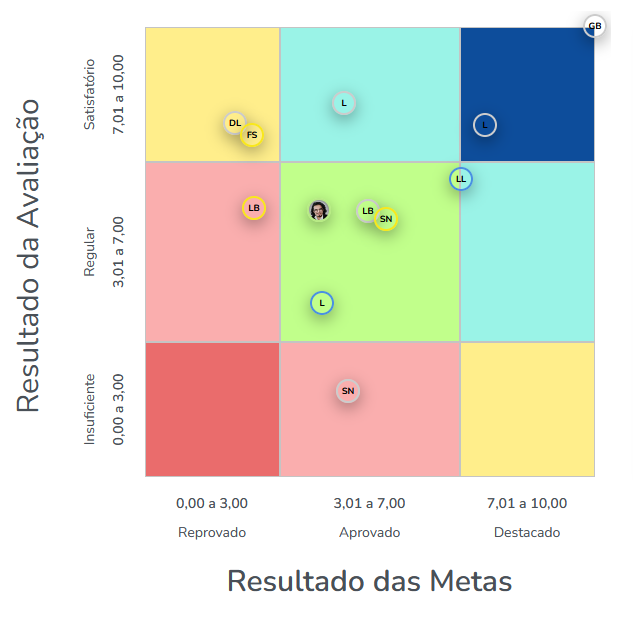
The Nine Box Matrix works by analyzing two main dimensions: Performance and potential. Here's how those dimensions are evaluated:
Performance
The vertical axis of the matrix evaluates employee performance. This involves analyzing their achievements, results, and contributions to the organization. Employees are ranked on a scale from low performance to high performance.
2- Potential
The horizontal axis of the matrix assesses employees' potential for growth and development. This takes into account their skills, competencies, and leadership capabilities. Employees are classified on a scale ranging from low potential to high potential.
What are the 9 quadrants?

The Nine Box Grid has nine distinct quadrants, each representing a specific combination of performance and potential. Here are those quadrants:
1- Stars
First, this quadrant represents high-performing employees who also have high growth potential.
In this way, they are considered the organization's most valuable assets and should be identified for development and promotion opportunities.
2- Growing Talents
In this quadrant, employees have great potential, but their current performance may not be exceptional.
In other words, they represent an investment opportunity in training and development to reach their full potential.
3- Solid contributors
These employees have solid performance, but their growth potential may be limited.
Furthermore, they are valuable in their current roles, but it's important to monitor for career advancement opportunities.
Read also: Performance review: concept, models, and how to do it
4- Challenged
Employees in this category have significant potential, but their current performance is below expectations.
Additionally, they may need guidance and training to improve their performance.
5- Unknowns
This group consists of employees with average performance and moderate growth potential.
In other words, these employees may need a more in-depth evaluation to determine their future in the organization.
6- Ready for changes
In the sixth quadrant, employees perform at a median level, but their growth potential is limited.
In other words, they can be considered for temporary or transitional roles.
7- Specialists
Employees in this category perform below average and have limited growth potential.
Additionally, they can be suitable for specialized short-term roles.
8- Need for improvements
These employees are underperforming, but their growth potential is moderate.
Additionally, they need development plans to improve their performance.
9 - Stagnant
Finally, this category includes employees with poor performance and no evident growth potential.
In other words, difficult decisions may be necessary, such as relocation or termination.
Why is the Nine Box Matrix important?

The 9 Box Matrix is a valuable tool for organizations as it helps identify talent, plan succession, develop leaders, and make informed workforce decisions.
Read more: Is it still worth applying the 9Box as a strategic tool for managing people?
Furthermore, it allows managers to have a clear view of each employee's performance and potential, which is essential for the company's growth and success.
How to use the Nine Box Matrix in your organization?
Now that you know what the Nine Box Matrix is, how it works, and its importance, Here are some tips on how to use it effectively:
1- Fair and objective evaluation
First, ensure that employee evaluations are fair, impartial, and based on concrete performance and potential data.
2- Custom Development
Create individualized development plans for employees in each quadrant to increase their potential.
3- Continuous support
Provide support and guidance to employees who need development, ensuring they have the necessary tools to grow.
4- Constant monitoring
Keep regular track of employee progress and adjust strategies as needed.
5. Informed decision-making
Finally, use the Nine Box Matrix ratings as a basis for promotion, training, and talent reallocation decisions.
Meet Actio Individual Performance, performance management software
In a world where people management becomes increasingly crucial in company strategies, the use of performance assessment tools plays a fundamental role in supporting the growth and affirmation of this area.
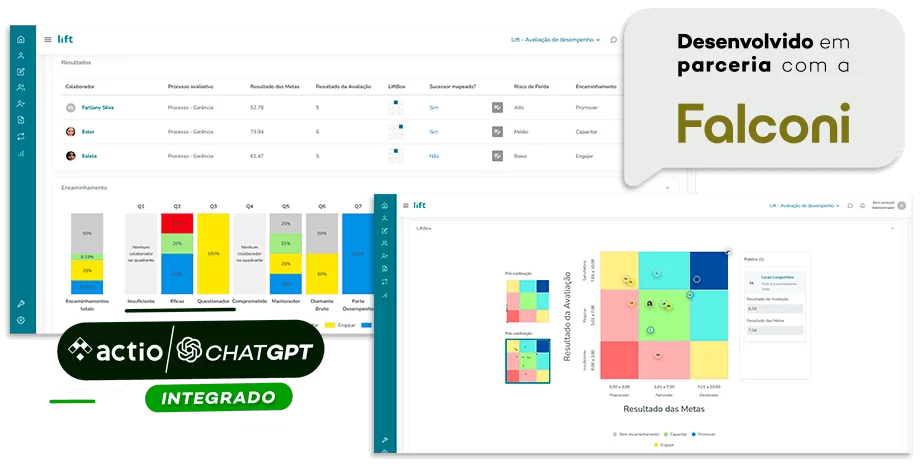
With that in mind, Actio and Falconi joined forces to create Actio Performance Individual, software designed to revolutionize people management.
This tool offers a wide range of features, including feedback calculation; leader assessments; pairs; self-assessments and followers; development of individual plans (PDI); calibration; creation of succession maps and much more.
Moreover, Individual Performance Action is highly adaptable and can be customized to meet your organization's specific needs.
Frequently Asked Questions
1- How can I implement the Nine Box Matrix in my organization?
To implement the Nine Box Matrix, define evaluation criteria, collect data, conduct regular assessments, and create individualized development plans.
2- What is the importance of talent management?
Talent management is essential for improving employee performance, planning for succession, and maintaining a competitive edge.
3- How often should I review employee positions on the Nine Box Matrix?
Reviews should be periodic, ideally annually, but can vary according to the organization's needs.
4. What to do if employees resist the Nine Box Matrix?
It is important to communicate the benefits of the Nine Box Matrix and, in addition, to listen to employee concerns to mitigate resistance.
Is the Nine Box Matrix suitable for organizations of all sizes?
Yes, the Nine Box Matrix can be adapted for organizations of all sizes, from small businesses to large corporations.
Conclusion
The Nine Box Matrix is an essential tool for talent management and strategic decision-making.
Because it allows organizations to identify and develop their key talent, which is essential for long-term success.
Furthermore, by applying this tool effectively, companies can build strong teams and exceptional leaders.
Therefore, now that you know all about the Nine Box Matrix, you are ready to implement it in your organization and reap the benefits it offers.
Don’t forget to follow Actio on Instagram, Linkedin and Facebook.
Did you like the content? Tell me in the comments.