

Transform point-in-time feedback into a continuous practice of development
Structure frequent, clear, and actionable feedback to turn perceptions into effective changes in behavior.
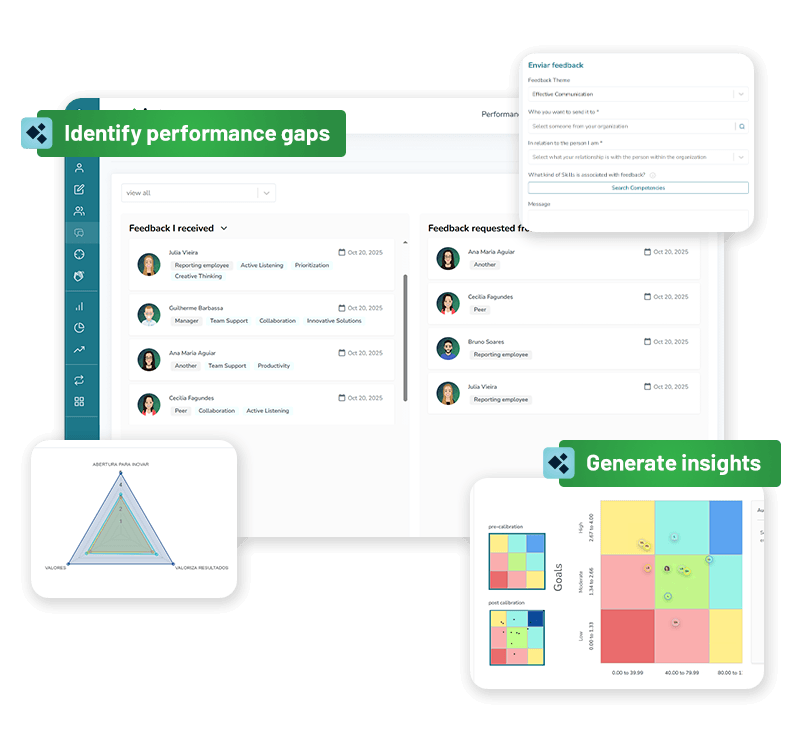
Connecting management and results in companies around the world







✦ Challenge
Do you have difficulty to establish a practice of frequent, clear feedback that can generate concrete changes?
Symptoms that your organization’s feedback management is still not an efficient practice:
Feedback only occurs when problems arise.
Leaders postpone conversations because they don’t know how to structure them.
The messages are generic and do not clearly indicate what should be kept or adjusted.
Employees receive late feedback on their behaviors or deliverables.
The feedback is restricted to conversations without a record or continuity.
There is no follow-up of the defined referral procedures.
Human resources cannot identify whether the practice occurs consistently across the departments.
The culture of feedback depends exclusively on the individual initiative of each manager.
✦ Solution
Create a feedback culture that generates evolution in day-to-day operations.
The Solution Management of Feedback It structures the process of requesting, offering, receiving, and recording feedback among leaders, employees, peers, and teams, with categories, guidelines, and a history of interactions.
It allows perceptions to be transformed into clear points for maintenance or improvement, tracking the progress and monitoring the adoption of the practice, preventing feedback from occurring only in the face of problems or being restricted to conversations without continuity.
More frequent and structured feedback
Structure criteria, weights, scales, and evaluation models in a standardized way throughout the organization.
Clarity to turn perceptions into action
Record the observed behaviors, deliveries, and impacts, making it clear what should be maintained or adjusted.
Visibility on the culture of feedback
Track frequency, participation, and adherence among areas and leaders, while preserving the confidentiality of interactions.
✦ Implementation steps
How to structure a continuous feedback practice
Structure the feedback practice in six connected steps, from defining the guidelines and the target audience to monitoring referrals and tracking compliance among departments and leadership.
01Defining the practice of feedback
01
Defining the practice of feedback
- Establish objectives, guidelines and target audiences.
- Configure categories and types of feedback.
- Define access and confidentiality rules.
- Orienting leaders and employees on the practice.
02Requesting feedback
02
Requesting feedback
- Select the people who will contribute.
- Inform the context and the purpose of the request.
- Use guiding questions or scripts.
- Set deadlines for responses.
03Offering structured feedback
03
Offering structured feedback
- Contextualize the observed situation.
- Record specific behaviors or deliveries.
- Explain the perceived impacts.
- Clearly indicate what should be kept or adjusted.
04Receiving and understanding
04
Receiving and understanding
- Centralize the feedback received.
- Consult the history of interactions.
- Register comments or clarifications.
- Identify the main points for maintenance and improvement.
05Following up on the referrals
05
Following up on the referrals
- Transforming feedback into clear commitments.
- Record actions and deadlines when necessary.
- Re-addressing the points discussed in new cycles.
- Check if the combined adjustments have taken place.
06Monitoring the feedback culture
06
Monitoring the feedback culture
- Track the frequency, participation, and distribution of the feedback.
- Identify areas and leaderships with low adherence.
- Send notifications about pending requests.
- Analyze the evolution of the practice without exposing confidential content.
Who is this solution for?
The solution connects leaders, employees, peers, and teams in a continuous feedback practice, supporting the entire process of requesting, offering, receiving, and following up on insights, improvement points, and referrals.
Responsible for Feedback Culture
It defines guidelines and monitors the adoption of the practice.
Human Resources Professional
It guides leaders and monitors the implementation of the feedback.
People manager
It provides clear feedback and tracks the follow-ups.
Collaborator
Requests, receives, and offers feedback.
Responsible for Leadership Development
It prepares managers for more objective and respectful conversations.
✦ Features
Resources for request, register and follow up on feedback
Resources to integrate feedback into the development workflow, connecting conversations, development plans, 1:1 meetings, praise, and cycle results into a centralized experience.

Individual Development Plans (IDP)
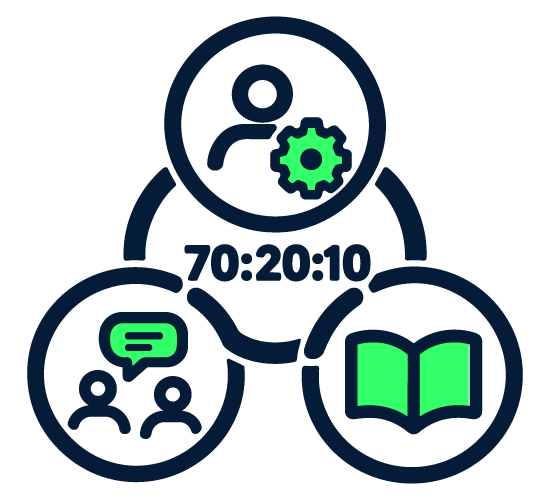
Methodology 70:20:10

Share library

Banknote block

1:1s

Continuous Feedback

Compliments

Results of the cycles

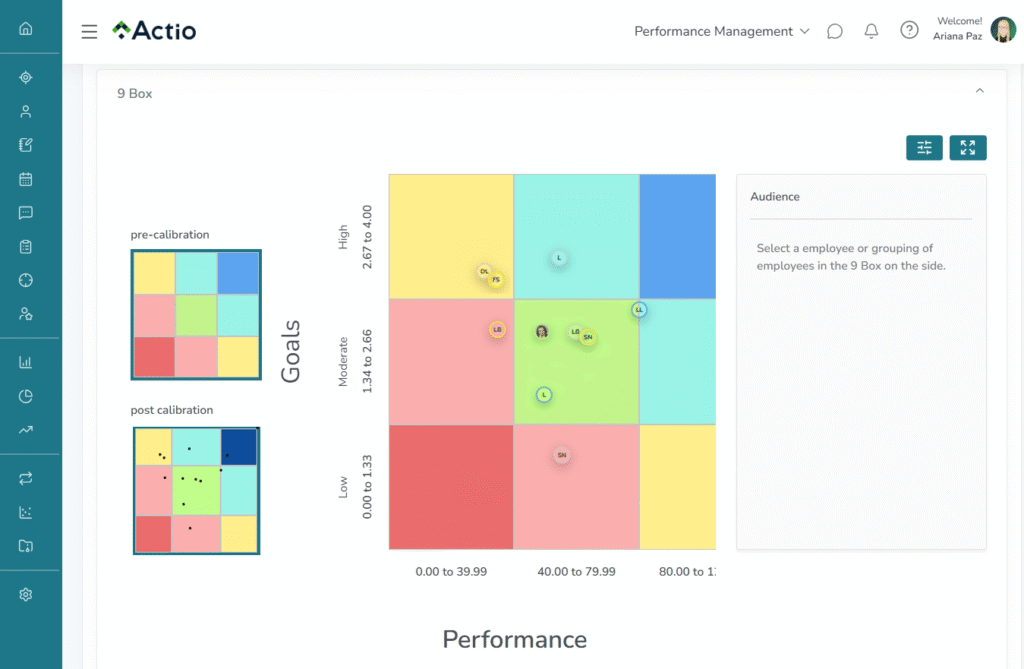
Matriz 9box

Evaluation of experience
✦ Schedule your demo
Strengthen your organization’s feedback culture
Discover the Actio Feedback Management solution and learn how to structure more frequent, clear, and development-oriented conversations across the entire organization.
✦ Frequently Asked Questions
Clear your doubts about Feedback Management
Check out the main questions about how to structure, monitor, and strengthen a continuous practice of feedback in the organization.
What is a Feedback Management solution?
It is a solution that structures the process of requesting, offering, receiving, and recording feedback among leaders, employees, peers, and teams, centralizing interactions and facilitating the monitoring of points of maintenance and improvement.
How does the solution help create a culture of continuous feedback?
The solution organizes guidelines, categories, requests, and feedback records, helping to incorporate the practice into routine and reducing the reliance on the individual initiative of each manager.
Is it possible to request feedback from other people?
Yes. It is possible to select participants, specify the context and objective of the request, use guiding questions or scripts, and set response deadlines.
Do the feedback forms get recorded?
Yes. The feedback can be centralized in a history of interactions, allowing for viewing previous records and tracking the evolution of the points discussed over time.
How can we make feedback clearer and more objective?
The solution guides the recording of the observed situation, the involved behaviors or deliveries, the perceived impacts, and what should be maintained or adjusted, helping to make the conversation more structured and actionable.
Is it possible to follow the defined workflows after a feedback?
Yes. The feedback can be turned into clear commitments, with action registration and deadlines when necessary, and follow-up in the following cycles.
How can HR keep up with the adoption of the feedback practice?
Human resources can track indicators such as frequency, participation, and distribution of feedback, identifying areas or leadership teams with lower adherence without having to expose confidential content.
The solution allows you to send reminders about pending feedback?
Yes. It is possible to send notifications about pending requests, helping to increase participation and keep the practice active.