
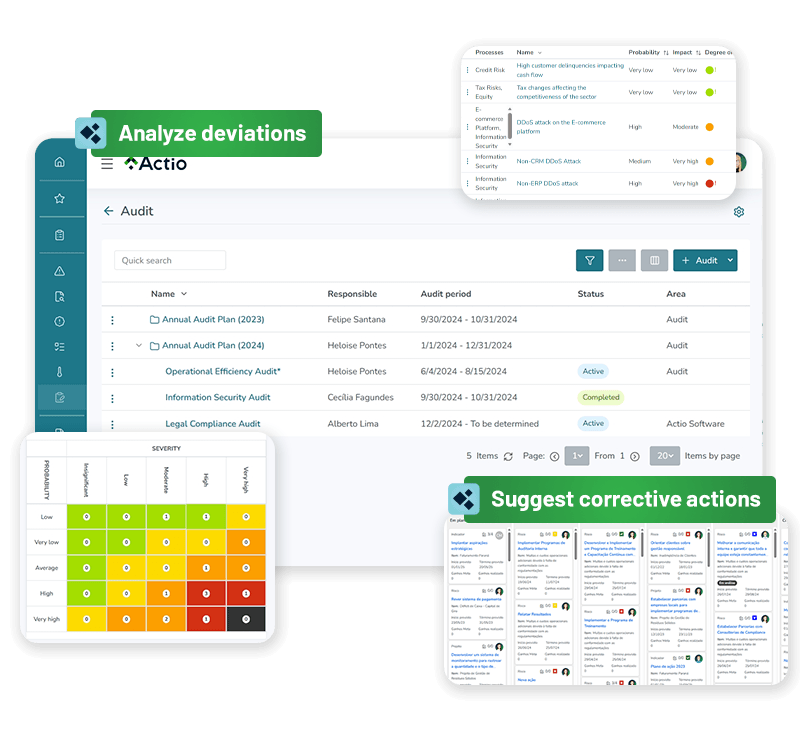
More control and traceability throughout the audit cycle
Manage the entire audit cycle with standardization, traceability, and control, from planning to monitoring the recommendations.
Connecting management and results in companies around the world




✦ Challenge
Do you have difficulty to standardize and ensure the traceability of audits?
Symptoms that the auditing management of your organization is not yet a standardized and traceable process:
Similar audits are carried out using different methods, criteria and documents.
The planning, procedures, evidence, and findings are scattered across different tools.
The follow-up of the actions depends on manual follow-ups and exchanges of emails with the audited departments.
The leadership does not have a consolidated view of the progress of the audits and the implementation of the recommendations.
✦ Solution
Centralize and standardize the entire audit cycle
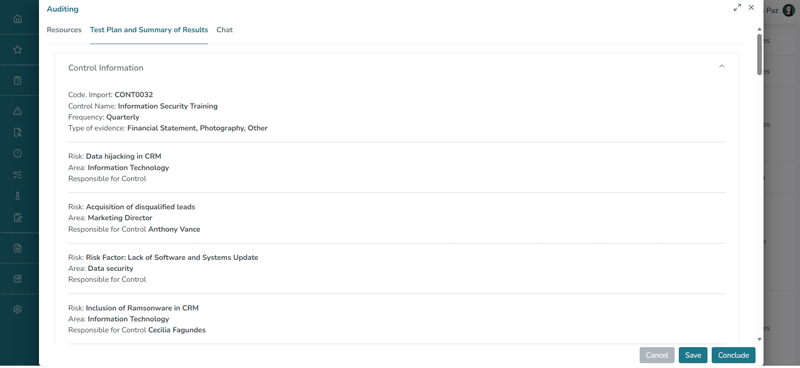
The solution of Auditing it increases the standardization, productivity, and traceability of audits, strengthens the independence of the function, and expands the ability to monitor risks, controls, and recommendations through governance.
The platform centralizes and standardizes the entire audit cycle, from annual planning, scope definition and procedure preparation to work execution, evidence recording, findings identification, report issuance and follow-up of recommended actions, with monitoring of responsible parties, deadlines and implementation status.
Standardization of the process
Structure plans, scopes, criteria, checklists, and procedures to maintain consistency between different audits.
Traceability of the evidence
Centralize documents, analyses, evidence, findings, and responses from the audited areas in a single history.
Monitoring of actions
Monitor action plans, responsibilities, deadlines, and implementation status to expand control over defined improvements.
✦ Implementation steps
How to plan, execute, and follow up the audit cycle
Structure the process end-to-end, keeping planning, execution, findings, reports, and recommendations connected in a continuous flow.
01Preparing the audit plan
01
Preparing the audit plan
- Defining the auditable universe and the priority criteria.
- Link the work to the risks, processes, and objectives of the organization.
- Prioritize audits based on criticality and exposure to risks.
- Structure the annual plan with responsible parties, periods, and planned resources.
02Planning the work
02
Planning the work
- Define the objective, scope, criteria, and timeline for each audit.
- Designate the team responsible for execution.
- Prepare work programs, checklists and tests.
- Request documents and information in advance from the audited areas.
03Performing the audit
03
Performing the audit
- Apply checklists, procedures, and audit tests.
- Record analyses, interviews and evidence.
- Documenting the work papers.
- Keeping track of the team's progress, deadlines, and activities.
04Register and validate the findings
04
Register and validate the findings
- Documentation documents findings, evidence, causes, risks, and impacts.
- Classify the findings according to their criticality.
- Share the preliminary results with the audited areas.
- Record responses, objections, and additional evidence.
05Issue the reports
05
Issue the reports
- Consolidate conclusions, findings and recommendations.
- Structure standardized and traceable reports.
- Present the main results to the board, the Audit Committee and the board.
- Using AI to support summaries, analyses and content creation.
06Follow the recommendations
06
Follow the recommendations
- Create action plans linked to the findings.
- Define responsibilities, deadlines, and expected evidence.
- Monitor pending, expired, and completed recommendations.
- Validate the implementation and effectiveness of the actions.
- Consolidate indicators regarding the annual plan, findings and results of the audit.
Who is this solution for?
The solution connects all those involved in the audit cycle, providing structured information for the execution, monitoring and follow-up of recommendations.
Responsible for Internal Audit
It structures the annual plan and is responsible for the function's performance in relation to governance.
Manager or coordinator of Audit
Defines scopes, distributes work, and monitors teams, deadlines, and results.
Internal auditor
It performs the work, conducts tests, records evidence, and documents findings.
Responsible for the area audited
It responds to requests, presents evidence and defines actions to address the recommendations.
Audit Committee and Board
They include the main findings, risks, control deficiencies, and pending recommendations.
✦ Features
Resources for to plan, carry out and follow up audits
Centralize the necessary resources to structure the audit plan, record evidence, document findings, track recommendations, and consolidate results for governance.

Risks and Controls

Risk Matrix
Auditing
Audit plan

Audit points

Report of results

Documents
Continuous Feedback

Action plan

Custom dashboards

Power BI
Executive presentations
Meetings
✦ Schedule your demo
Make the audit process more integrated and traceable
Discover the Actio Audit solution and discover how to centralize the audit cycle, standardize work, and track findings and recommendations with greater control.
✦ Frequently Asked Questions
Clear up your doubts about audit management
Objective answers for organizations that seek to standardize processes, expand traceability, and improve the monitoring of recommendations.
What does a central audit management solution centralize?
It brings together annual planning, scopes, procedures, evidence, findings, reports, and recommendations in a single environment, facilitating the monitoring of the entire cycle.
How does Actio help standardize audits?
The platform allows for the structuring of standardized criteria, work programs, checklists, tests, and reports, reducing variations between similar processes.
Is it possible to relate audits to risks and processes?
Yes. The work can be associated with the risks, processes, and objectives of the organization, helping to guide the prioritization of the audit plan. audit
How does the recording of evidence and findings work?
During execution, the team can record analyses, interviews, documents and evidence and relate them to the findings, causes, risks and impacts identified.
Is it possible to follow recommendations after the audit?
Yes. The recommendations can generate action plans with responsible parties, deadlines, and expected evidence, allowing for the tracking of pending, expired, and completed items. audit.
How does the leadership keep up with the progress of the audits?
The solution consolidates information about the annual plan, findings, recommendations, and results, facilitating the preparation of reports and monitoring by the board, committees, and council.
Does the solution help in the preparation of reports?
Yes. The material provides for standardized and traceable reports, as well as the use of artificial intelligence to support summaries, analyses, and the creation of content. audit