Skip to content
  • English
  • Português
  • Español
  • English
  • Português
  • Español
  • Products
    • Actio | Strategy Management
    • Actio | Project Management
    • Actio | Risk Management
    • Actio | Audit
    • Actio | Document Management
    • Action | Process Management
    • Actio | Dayway
    • Actio | Individual Performance
    • Actio | Bonus Management
  • Solutions
    • Actio | Corporate Performance
    • Actio | Strategy Deployment
    • Actio | Strategy Execution
  • Services
    • Integrations
    • Analytics
  • Knowledge
    • Blog
    • Events and Webinars
    • Strategic Analyses
  • Community
  • Contact us
  • Become a partner
  • Products
    • Actio | Strategy Management
    • Actio | Project Management
    • Actio | Risk Management
    • Actio | Audit
    • Actio | Document Management
    • Action | Process Management
    • Actio | Dayway
    • Actio | Individual Performance
    • Actio | Bonus Management
  • Solutions
    • Actio | Corporate Performance
    • Actio | Strategy Deployment
    • Actio | Strategy Execution
  • Services
    • Integrations
    • Analytics
  • Knowledge
    • Blog
    • Events and Webinars
    • Strategic Analyses
  • Community
  • Contact us
  • Become a partner
Contact us

Home " Falconi Method: Understand Management by Objectives (MBO)

Falconi Method: Understand Management by Objectives (MBO)

Discover the Falconi Method of Management by Guidelines (GPD): clear strategies, goals, and innovation to drive organizational success.
  • Guilherme Barbassa
  • Strategy and Performance
  • 13:05
  • 08/12/2025
Discover the Falconi Method of Management by GPD Guidelines

Table of contents

Foto de Guilherme Barbassa

Guilherme Barbassa

Guilherme Barbassa is CEO of Actio Software, with over 20 years of experience in strategic management and business transformation. He works in the integration between strategy, governance, and technology, supporting senior leadership in building results-oriented management systems.

Read also

Home » Blog » Strategy and Performance
" Falconi Method: Understand Management by Objectives (MBO)

Falconi Method: Understand Management by Objectives (MBO)

Indicators are essential, but they can hinder strategy execution when they fail to guide decision-making. Learn when metrics turn into noise.

  • By Guilherme Barbassa
  • Strategy and Performance
  • 16:00
  • 08/12/2025

Table of contents

Have you heard of Management by Objectives (MBO)? Developed by Vicente Falconi, this methodology stands out for connecting strategic planning to the routine of the entire team. However, contrary to what one might think, more than just a management theory, MBO functions as a gear that aligns top management's goals with operational execution.

Many companies have impeccable plans but fail during implementation. In fact, strategy execution is the central challenge that determines a business's survival and success. In these contexts, Falconi's method becomes crucial, as it offers the necessary structure to transform grand objectives into measurable results.

Therefore, in today's article, we will explore the fundamental aspects of this methodology. Thus, we will understand how GPD can enhance the implementation of your strategies and, consequently, elevate your organization's level of excellence. Shall we begin?

How did the Falconi Method of GPD originate?

How did the Falconi Method of GPD originate?

Until the 1980s, the national scene prioritized government bureaucracies over effective management, rarely discussing goals or action plans. This dynamic only began to transform in the 1990s, when market liberalization forced companies to adapt quickly to new demands. After all, it was during this period that the pursuit of efficiency became the norm, driving the need for more robust methods.

In this context of change, Vicente Falconi introduced the concept of Management by Objectives (MBO) as part of Total Quality Management. Falconi's great merit was realizing that the deployment method could be applied to all areas of the organization. Thus, he went beyond the initial approach, which was centered only on the quality of technical processes, and took the strategy to the executive level.

In his book “Management by Guidelines”Falconi details this approach and highlights how strategy and management can be integrated through solid guidelines.

But after all, what is the GPD methodology?
What is management by objectives?

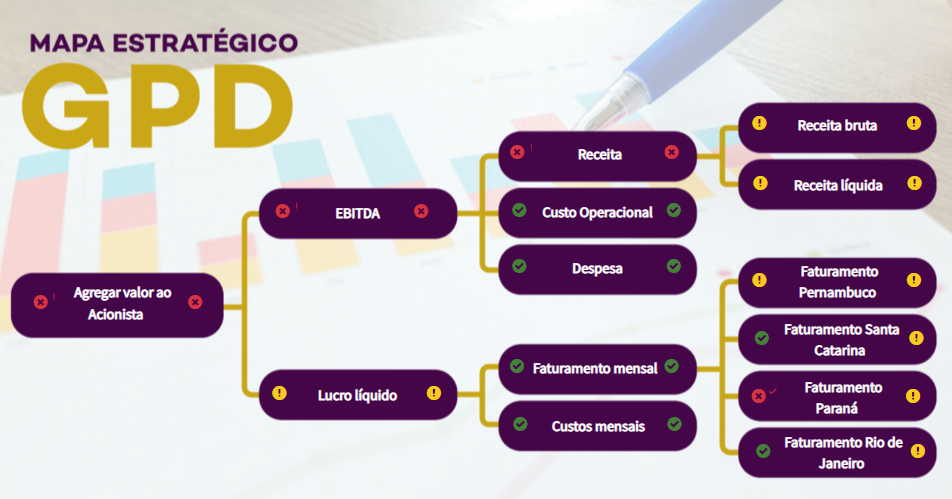
Photo: Example of the strategic map of the GPD in the strategic management software of the Falconi group, Tune by Actio.

Management by Directives (MBD) is a business management approach that aligns an organization's strategic objectives with daily activities, ensuring the integration of all company areas to achieve them. 

Furthermore, these guidelines are developed based on critical analyses of the company's current situation and market trends. In this way, it takes into account the needs and expectations of customers, shareholders, and other stakeholders.

What are the objectives of management by directives (MBD)?

Now that we understand the origin and function of the GPD in the Falconi Method, the next step is to identify the objectives that support this practice. This is because, more than simple monitoring, this methodology seeks to ensure that the company's vision is translated into practical and measurable actions at all levels.

In other words, the central focus is to eliminate process fragmentation, ensuring that each sector directly contributes to the global results. And by implementing the objectives we will see below, the organization establishes a continuous flow of improvement and control. Check it out:

1 - Goal Setting

The initial focus of GPD is to establish clear objectives for the business. To achieve this, the methodology is based on a rigorous analysis of internal and external contexts, as well as the expectations of customers and other stakeholders.

In this process, the formulation of goals must derive directly from the organization's future vision. For this reason, it is essential that this planning considers strengths, weaknesses, opportunities, and threats, ensuring that the strategy is realistic and resilient.

2 – Goal Optimization and Management

Once the goals have been established, the responsibility for effective optimization and management falls on the direct supervisors of the GDP. 

This implies the definition of performance indicators, the monitoring and control of targets, and the implementation of necessary adjustments to ensure their achievement.

3 – Continuous Improvement

Finally, the Falconi method of GPD also aims to foster continuous improvement of the company by identifying growth opportunities in processes, products, and services. However, for this to happen, managers must invest in a critical analysis of the results obtained, implementing corrective and preventive actions as needed.

Looking for software for Strategic Management? Get to know Tune by Actio, developed by the Falconi group company.

How to implement the Falconi Method from GPD in 3 steps?

How to put the Falconi method of GPD into practice?

To put Management by Guidelines (MBG) into practice, it is not necessary to deal with overly complex processes. However, the success of the implementation requires attention to specific points so that the methodology is applied correctly and generates real benefits.

Ultimately, effective execution depends on discipline and a logical chain of steps. Thus, by following the fundamental steps of the Falconi method, your company ensures that the strategy doesn't remain just talk, transforming into a routine focused on high performance. 

Check out the main pillars for this application in three steps:

1 – Have a structured plan

First, it is crucial to have a well-developed strategic plan that reflects the company's vision for the coming years. To this end, senior management must clearly define the company's objective, that is, where it wishes to head. 

Therefore, only from this understanding is it possible to develop this objective into goals, which will be distributed among the various departments and collaborators.

Define the role of each sector

The first breakdown in strategic planning occurs when establishing the role of each area in achieving these objectives. Therefore, it is crucial to make it clear to each department how the activities carried out will directly influence the organization's course toward its objectives. 

Furthermore, this clarification makes it easier for those working at the tactical and operational levels to understand the impact of their actions on the company's macro-strategy.

3 – Establish indicators

Finally, indicators are crucial resources for evaluating the effectiveness of the actions outlined on the company's path to progress. 

By monitoring these metrics, it becomes possible to assess the company's proximity to achieving its goals and, consequently, adjust course and implement improvements if necessary.

Also read: Project Scope

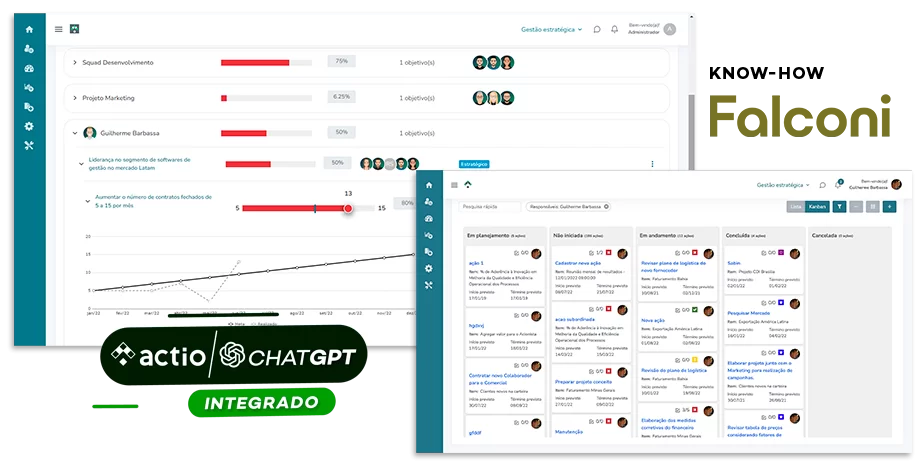
Introducing Tune by Actio, a strategic management software
Introducing Tune by Actio, a strategic management software

The application of the Falconi method has contributed significantly to the success of various organizations. After all, by strategically distributing shares, the methodology not only allows for effective implementation of plans but also the identification and correction of chronic problems that hinder growth.

Thus, by adopting GPD, the company standardizes its short-term and long-term planning processes. This move strengthens organizational culture and promotes employee engagement, as they begin to clearly understand their role in the results. However, the success of this journey requires total commitment and the support of adequate technology to centralize information.

This is where Tune by Actio emerges as the ideal solution for managing GPD in your company. As part of the Falconi Group, the software offers a multi-methodology platform that integrates various areas and guarantees full control over goals and action plans. This is because using the right tool is undoubtedly the final step to ensure the effectiveness of your management.

Did you like the content? Leave your opinion in the comments and don't forget to follow Actio on Instagram, LinkedIn and Facebook to follow more news about business excellence!

Frequently Asked Questions about the Falconi Method

Check out some of the most common questions on the topic below:

How does the PDCA cycle help GPD?

The GPD uses the PDCA cycle as a basis to improve the execution, monitoring, and enhancement of the company's processes and projects.

The principles of Vicente Falconi are based on a management philosophy focused on achieving outstanding results through a structured and disciplined approach. Here are the core principles:1. **Objectives and Projects (Planejamento Estratégico):** Clearly define the organization's strategic objectives and break them down into specific projects with clear responsibilities, deadlines, and expected results. This involves understanding where the company wants to go and how it will get there.2. **Balanced Scorecard (BSC) / Key Performance Indicators (KPIs):** Establish a system of indicators that measure performance across different perspectives (financial, customer, internal processes, learning and growth). This ensures that progress towards strategic objectives is monitored comprehensively.3. **Management by Results (Gestão por Resultados):** Focus on achieving tangible outcomes and results rather than just processes. Employees are empowered and held accountable for delivering specific, measurable, attainable, relevant, and time-bound (SMART) goals.4. **Meritocracy and Accountability (Meritocracia e Responsabilidade):** Promote and reward individuals based on their performance and results. Leaders are responsible for the outcomes of their teams, and accountability is a fundamental tenet.5. **Continuous Improvement (Melhoria Contínua):** Foster a culture where seeking to improve processes, products, and services is constant. This involves identifying inefficiencies, learning from mistakes, and implementing corrective actions systematically.6. **Empowerment and Delegation (Empoderamento e Delegação):** Delegate authority and responsibility to lower levels of the organization, empowering employees to make decisions and take ownership of their work. This fosters engagement and agility.7. **Communication and Transparency (Comunicação e Transparência):** Maintain open and honest communication channels throughout the organization, ensuring that all stakeholders are informed about objectives, progress, and challenges. Transparency builds trust and alignment.8. **People Development (Desenvolvimento de Pessoas):** Invest in the training and development of employees, equipping them with the skills and knowledge necessary to excel in their roles and contribute to the organization's success.9. **Customer Focus (Foco no Cliente):** Understand and prioritize the needs and expectations of customers, aligning all organizational activities to deliver value and achieve customer satisfaction and loyalty.10. **Financial Discipline (Disciplina Financeira):** Maintain rigorous control over financial resources, ensuring efficient allocation and responsible management to support strategic objectives and sustainable growth.These principles aim to create an organizational environment where everyone understands the goals, is empowered and accountable for their contribution, and works towards continuous improvement and the achievement of exceptional results.

Falconi values data- and evidence-based management, which can be achieved through the creation and application of indicators in company management. 

This way, by closely monitoring these indicators, decisions within the organization become scientifically based.

The three main pillars of the GPD are

The essential foundations of GPD are composed of three pillars, which constitute the basis of this method's remarkable success. Therefore, understanding these elements is crucial for a full comprehension of GPD. 

They are: dedication and creative action, innovation and monitoring.

Post Views: 212
Guilherme Barbassa
Guilherme Barbassa

Guilherme Barbassa is CEO of Actio Software, with over 20 years of experience in strategic management and business transformation. He works in the integration between strategy, governance, and technology, supporting senior leadership in building results-oriented management systems.

Foto de Guilherme Barbassa

Guilherme Barbassa

Guilherme Barbassa is CEO of Actio Software, with over 20 years of experience in strategic management and business transformation. He works in the integration between strategy, governance, and technology, supporting senior leadership in building results-oriented management systems.

Fill out the form and get to know the solution da Actio to manage strategy with governance, visibility, and alignment over time.

Read also

Quality Management System: uniting quality and strategy 

Strategy and Performance
Read more

Innovation Management: How to Structure, Prioritize, and Turn Ideas into Results 

Strategy and Performance
Read more

Enterprise management system: the critical link between strategy and execution in organizations 

Strategy and Performance
Read more

Home " Falconi Method: Understand Management by Objectives (MBO)

Falconi Method: Understand Management by Objectives (MBO)

Discover the Falconi Method of Management by Guidelines (GPD): clear strategies, goals, and innovation to drive organizational success.
  • 08/12/2025
  • 13:05
  • Strategy and Performance
Discover the Falconi Method of Management by GPD Guidelines

Share this content:

Foto de Guilherme Barbassa

Guilherme Barbassa

Guilherme Barbassa is CEO of Actio Software, with over 20 years of experience in strategic management and business transformation. He works in the integration between strategy, governance, and technology, supporting senior leadership in building results-oriented management systems.

Share this content:

Latest posts:

Análise SWOT: como transformar análise estratégica em execução

06/03/2026

ESG e Compliance: Alinhando ética e sustentabilidade 

30/05/2025

Gestão Estratégica: Como alinhar metas e resultados

02/04/2025

O papel do mapa estratégico no Balanced Scorecard

02/04/2025

Gestão estratégica e planejamento: Dicas práticas

19/03/2025

Gestão de pessoas: exemplos, objetivos e como aplicar

13/02/2025

Gestão de pessoas nas empresas: Estratégias para engajar 

06/02/2025

Leave a reply

Automate, centralize, and track your company’s management processes. We combine technology with the latest in management practices.
Linkedin-in Facebook-f Instagram

CONTACT

  • +55 (31) 3972-1800
  • [email protected]
  • [email protected]

Opening

  • Monday to Friday, 9am to 6pm

Solutions

  • Actio | Strategy Management
  • Actio | Risk Management
  • Actio | Performance Management
  • Actio | Bonus Management
  • Actio | Dayway

Services for clients

  • Data Consulting
  • Integrations
  • Trainings

Knowledge

  • Blog
  • Events and Webinars
  • Strategic Analyses

Actio

  • About us
  • Community
  • Contact us
  • Privacy Policy
  • Terms of Service
  • About us
  • Contact us
  • Privacy Policy
  • Terms of Service

© Actio Software. All rights reserved.

We are using cookies to give you the best experience on our website.

You can find out more about which cookies we are using or switch them off in .

Scroll to Top
Powered by  GDPR Cookie Compliance
Privacy Overview

This website uses cookies so that we can provide you with the best user experience possible. Cookie information is stored in your browser and performs functions such as recognising you when you return to our website and helping our team to understand which sections of the website you find most interesting and useful.

Strictly Necessary Cookies

Strictly Necessary Cookie should be enabled at all times so that we can save your preferences for cookie settings.