Skip to content
  • English
  • Português
  • Español
  • English
  • Português
  • Español
  • Products
    • Actio | Strategy Management
    • Actio | Project Management
    • Actio | Risk Management
    • Actio | Audit
    • Actio | Document Management
    • Actio | Process Management
    • Actio | Checklist Dayway
    • Actio | Individual Performance
    • Actio | Bonus Management
  • Solutions
    • Actio | Corporate Performance
    • Actio | Strategy Deployment
    • Actio | Strategy Execution
  • Services
    • Integrations
    • Analytics
  • Cases
  • Knowledge
    • Blog
    • Events and Webinars
  • Community
  • Contact us
  • Become a partner
  • Products
    • Actio | Strategy Management
    • Actio | Project Management
    • Actio | Risk Management
    • Actio | Audit
    • Actio | Document Management
    • Actio | Process Management
    • Actio | Checklist Dayway
    • Actio | Individual Performance
    • Actio | Bonus Management
  • Solutions
    • Actio | Corporate Performance
    • Actio | Strategy Deployment
    • Actio | Strategy Execution
  • Services
    • Integrations
    • Analytics
  • Cases
  • Knowledge
    • Blog
    • Events and Webinars
  • Community
  • Contact us
  • Become a partner
Contact us

Home " KPI management - how to implement it in your organization?

KPI management - how to implement it in your organization?

If you recognize the advantages of implementing KPI management in your company, but don't know how to do it, follow some steps below.
  • Heloise Pontes
  • People Management
  • 14:05
  • 16/10/2018
indicator management

Table of contents

Foto de Heloise Pontes

Heloise Pontes

Product Manager at Actio Software, responsible for driving the product lifecycle.

Read also

Home » Blog » People Management
" KPI management - how to implement it in your organization?

KPI management - how to implement it in your organization?

Indicators are essential, but they can hinder strategy execution when they fail to guide decision-making. Learn when metrics turn into noise.

  • By Heloise Pontes
  • People Management
  • 16:00
  • 16/10/2018

Table of contents

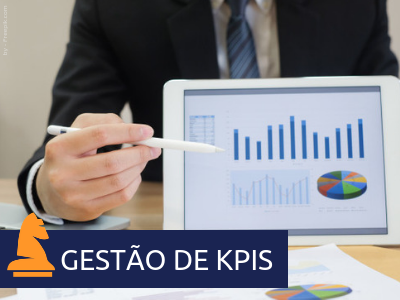
indicator managementWorking with performance indicators is not a new practice, but many companies still don't know exactly how to implement them. KPI management in the organization's day-to-day operations.

The acronym KPI comes from the term Key Performance Indicator and it relates to the data that is relevant to measuring the performance of a process and those involved in it.

Indicators allow managers to measure what is working well or not in all company processes, identify problems, and establish solutions to optimize work.

Establishing a KPI management system also allows track employee goal attainment, and helps them prioritize tasks and understand their responsibilities within the organization.

Read also: “How to create a KPI tracking culture?”

If you recognize the advantages of implementing this management in your company, but don't know how to do it, follow these steps:.

Align the indicators with the strategic plan

It is fundamental that every company has strategic planning guiding its actions to achieve specific objectives. It is through this planning that employees understand their roles and how processes will add value to the organization's products and/or services.

In KPI management, it is necessary to fully understand the strategic objectives so that they are translated into goals aligned with them.

Set realistic goals

The goals based on strategic planning need to be relevant to the business, measurable, and realistic, so that it's possible to establish a timeframe for them to be achieved and, from there, choose the KPIs that will be monitored.

Choose the KPIs

After having established goals, it is necessary to know how to measure whether the company is moving towards success or not. The indicators performance metrics are intended to measure the performance of the process to which each goal refers.

The main tip for guiding the choice of indicators is that they cannot be difficult to measure. It is worth remembering that they should focus on tasks that add the most value to the production chain.

It is not recommended to set an exaggerated number of Key Performance Indicators, a maximum of five for each process. It is also important to indicate who is responsible for the performance of the KPIs, whether it is a person or a department.

See also: “The success indicators you can't lose sight of when managing projects”

Monitor the processes

The next step is to track the performance of the processes to verify if the performance is within expectations. The KPIs need to be constantly measured and monitored, so that any deviations they be perceived and measures be taken.

Fix the flaws in your KPI management

A KPI below the target is a signal that an intervention needs to be made for performance to return to the desired level. To this end, the causes must be evaluated so that the correction addresses the root of the problem.

Continuously seek improvement

One of the main purposes of KPI management should be continuous improvement in processes, even if the performance goal is being met.

Investigating the occurrence of delays, bottlenecks, and waste is a way to optimize processes and achieve ever-higher performance levels.

It's important to remember that KPIs need to be authentic, based on data reliable, to the point of guiding the company to the best decision-making. The idea is that the company does not remain static, but takes steps forward with the implementation of management.

Depending on the type of organization, KPIs need to be aligned with standards such as ISO 9001 and PBQP-H, for example. This means the task will not be as simple as it seems.

Indeed, implementing a culture of manually monitoring KPIs requires a lot of work, involving the creation of formulas and charts, a data collection process, and even jeopardizing its reliability. However, there are currently specific software solutions on the market that facilitate this implementation.

If you are interested in learning more about Stratec's systems, please contact us. It will be our pleasure to present our software and offer your company a free demonstration!


Ebook KPIS

Post Views: 252
Heloise Pontes

Product Manager at Actio Software, responsible for driving the product lifecycle.

Foto de Heloise Pontes

Heloise Pontes

Product Manager at Actio Software, responsible for driving the product lifecycle.

Fill out the form and get to know the solution da Actio to manage strategy with governance, visibility, and alignment over time.

Read also

Intelligent Automation: the new paradigm of strategic execution 

Strategy and Performance
Read more

AI Flowchart: From Process Modeling to Strategy Execution 

Strategy and Performance
Read more

OKR Model: How to Structure and Implement in Strategic Management 

Strategy and Performance
Read more

Home " KPI management - how to implement it in your organization?

KPI management - how to implement it in your organization?

If you recognize the advantages of implementing KPI management in your company, but don't know how to do it, follow some steps below.
  • 16/10/2018
  • 14:05
  • People Management
indicator management

Share this content:

Foto de Heloise Pontes

Heloise Pontes

Product Manager at Actio Software, responsible for driving the product lifecycle.

Share this content:

Latest posts:

Análise SWOT: como transformar análise estratégica em execução

06/03/2026

ESG e Compliance: Alinhando ética e sustentabilidade 

30/05/2025

Gestão Estratégica: Como alinhar metas e resultados

02/04/2025

Mapa estratégico no Balanced Scorecard: o que é, como fazer e exemplos práticos

02/04/2025

Gestão estratégica e planejamento: Dicas práticas

19/03/2025

Gestão de pessoas: exemplos, objetivos e como aplicar

13/02/2025

Gestão de pessoas nas empresas: Estratégias para engajar 

06/02/2025

Leave a reply

Automate, centralize, and track your company’s management processes. We combine technology with the latest in management practices.
Linkedin-in Facebook-f Instagram

CONTACT

  • +55 (31) 3972-1800
  • [email protected]
  • [email protected]

Opening

  • Monday to Friday, 9 AM to 5 PM

Knowledge

  • Blog
  • Events and Webinars

Actio

  • About us
  • Contact us
  • Privacy Policy
  • Terms of Service

© Actio Software. All rights reserved.

We are using cookies to give you the best experience on our website.

You can find out more about which cookies we are using or switch them off in .

Scroll to Top
Powered by  GDPR Cookie Compliance
Privacy Overview

This website uses cookies so that we can provide you with the best user experience possible. Cookie information is stored in your browser and performs functions such as recognising you when you return to our website and helping our team to understand which sections of the website you find most interesting and useful.

Strictly Necessary Cookies

Strictly Necessary Cookie should be enabled at all times so that we can save your preferences for cookie settings.