Using experience and skills to create a positive intervention within institutions, or even a structural change, is a routine task for consultants. Sometimes a company only needs minor corrections; other times, a complete transformation in the organizational structure is necessary. When the change is significant, how can a consultant leave a tangible legacy for the organization? That's what we'll explore in the following paragraphs!
Putting consulting in numbers
Those who have been in the field for a long time know that it is not the consultant's role to make decisions, but rather to advise their clients so that they can implement the proposals and consulting plans in the best possible way. During the planning and execution stages of the consultancy, the client needs to gain perception of the work, just as the strategy needs physical support, something that makes it tangible to the client and with which they can identify the service being provided.
Scan Results
1
It's very common to see good projects with well-done plans that end up being shelved. Once the consultant leaves, the planning report isn't implemented in practice, and the blame usually falls on the consultancy. That's why having a tool that makes consultancy tangible is important for commitment from the organization and its teams, as well as for thorough evaluation. This way, the client can verify what was actually executed and achieved.
According to Renan Chagas, strategic planning consultant and director of GrowUp Business Strategy, It is important that at the time of hiring, the consultant clearly explains to the client the project stages and the progression timeline, as well as the deliverables for each stage. It is also essential to measure the impacts that will be brought to the company, whether financial, increase in sales, profitability, cost reduction, as well as other services, and that all of this is recorded in minutes.
A system to support your consulting
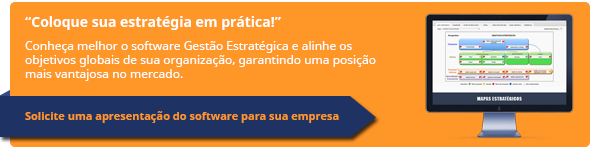
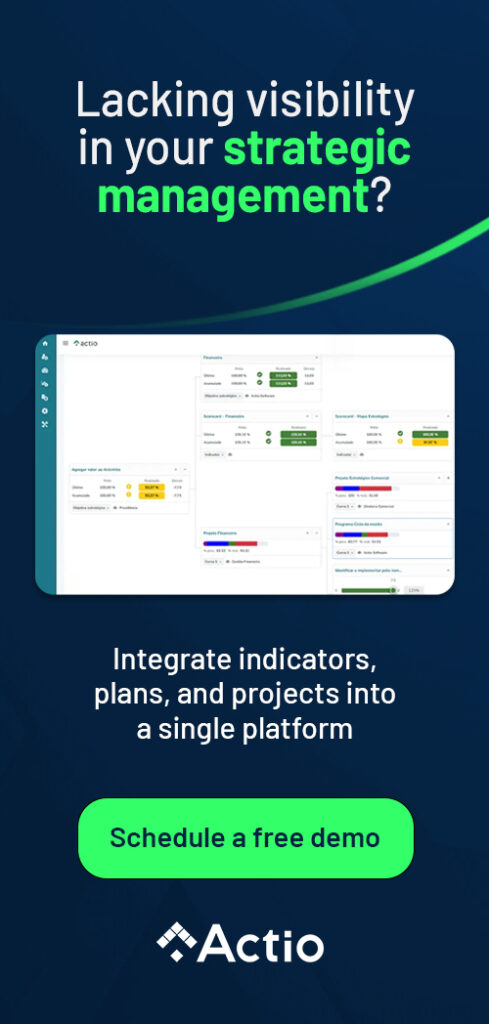
The software Strategy Management It is a tool that helps the consultant make the proposal tangible. After the diagnosis, analysis, synthesis, and planning of measures are carried out, the client can get lost in the implementation and evaluation phases. A dispersed team, missed deadlines, lack of feedback – all of these are factors that hinder strategy execution.
For Guilherme Barbassa, executive director of Stratec, the use of Strategic Management assists the consultant in two main moments. First, at the point of sale, which is when the consultant is selling their consulting project, that is, their knowledge which, when applied, generates an improvement in the organization's overall results. The second moment is the execution itself, as the client has difficulty visualizing this service, how it will be done and delivered. The software assists in these processes because, through it, the client can perceive the structure of the plan before and after it is completed. “When the software is offered along with the consultancy, you start offering a solution and not just a service. This plan will be translated into concrete things,” says Guilherme.
Chagas also points out some software functionalities that can be beneficial, such as: meeting templates with pre-scheduled presentations, graphical tools, mobility that allows for remote use, and the grouping of information in an information channel. Furthermore, Chagas notes that the software is a great facilitator, assisting in critical analysis meetings as a repository for measurement and enabling the identification of what has not been done, in addition to proposing corrective and improvement actions.
With this, it is understood that Strategic Management has a series of functionalities that allow the consultant to initiate, plan, monitor, and verify their strategy within organizations in a much more precise and verifiable way. We have special conditions for partner consultants. Contact us!