
API integrations to unify management
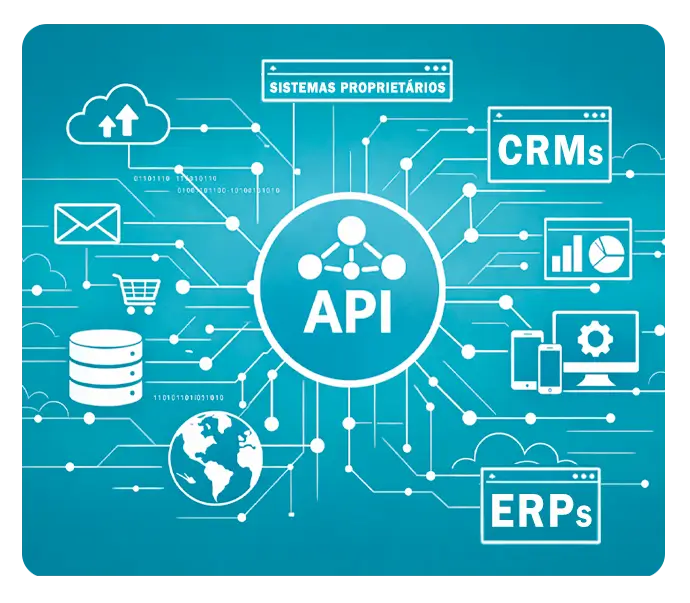

How much time do you lose consolidating information across different platforms?
The Integrations service connects the Actio platform to different environments and databases, ensuring automatic data updates and continuous alignment across areas.
API integrations ensure aligned information across the entire operation, freeing up team time for strategic activities and reducing operational failures
Without integrations
- Information updates occur in a distributed manner across tools, requiring recurring reconciliations throughout daily operations.
- Access to consolidated data depends on manual update cycles, which can delay analyses and decisions.
- Processes such as exports, spreadsheet adjustments, and intermediate data loads are part of daily operations, consuming operational time.
- Simple synchronization activities end up requiring recurring support from the IT area, reducing team autonomy.
- Management depends on multiple update points, which increases the need for checks to ensure data consistency.
Without integrations
- Information starts to be automatically updated across relevant systems, with minimal manual intervention.
- Data remains continuously synchronized, keeping the platform always aligned with operational reality.
- Information consistency is preserved across the organization, strengthening the reliability of indicators, goals, and results.
- Reducing rework frees teams to focus on analytical, strategic, and higher value-added activities.
- More agile updates support faster, safer, and better-aligned decisions, increasing confidence in management.
What is an API integration
An API integration allows the automatic and secure exchange of data between different systems, eliminating manual entries, reducing errors, and ensuring data consistency across management processes.
Actio’s API integration service connects corporate systems such as ERP, HR, BI, CRM, and legacy solutions to the platform’s modules through a secure communication layer. Data is synchronized and validated before use, ensuring fluidity, traceability, and governance in the management of strategy, people, risks, budget, and compensation.
This model is recommended for organizations that handle high volumes of data, multiple corporate systems, and the need to sustain management with reliable, up-to-date, and integrated information.
Actio offers native integrations and API-based integrations, connecting the platform to the systems already used by organizations, with security and governance.






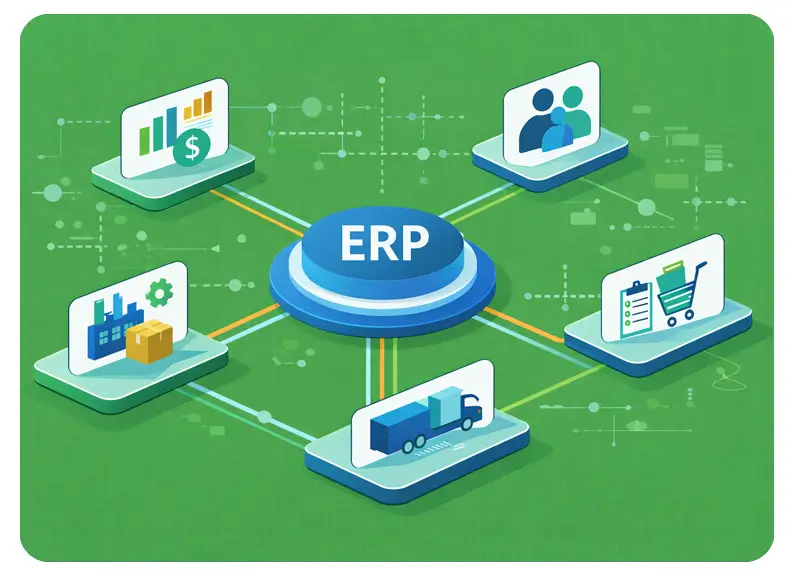
ERPs – Connect corporate, industrial, or service ERPs
Synchronize financial, budget, and operational data directly with Actio, ensuring consistency across planning, monitoring, and results.
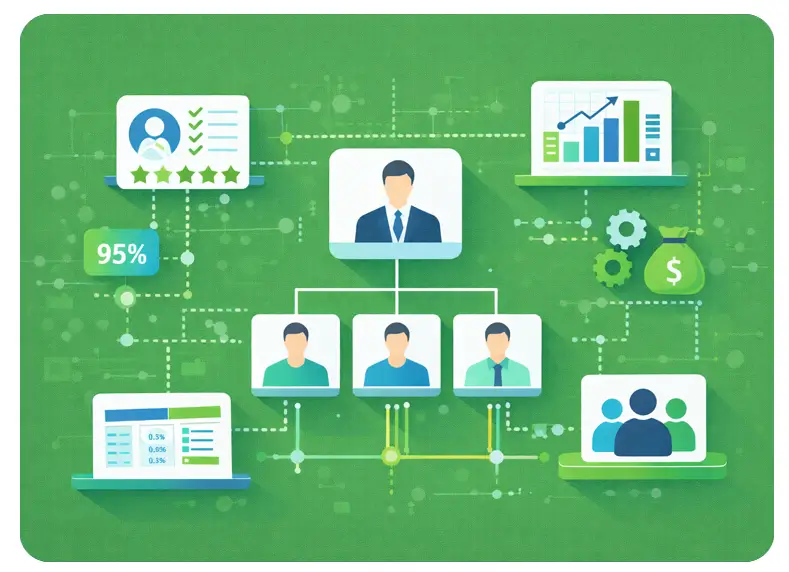
HR and people management systems
Bring employee data, organizational structures, performance, and variable compensation into Actio, aligning strategy, people, and incentives.
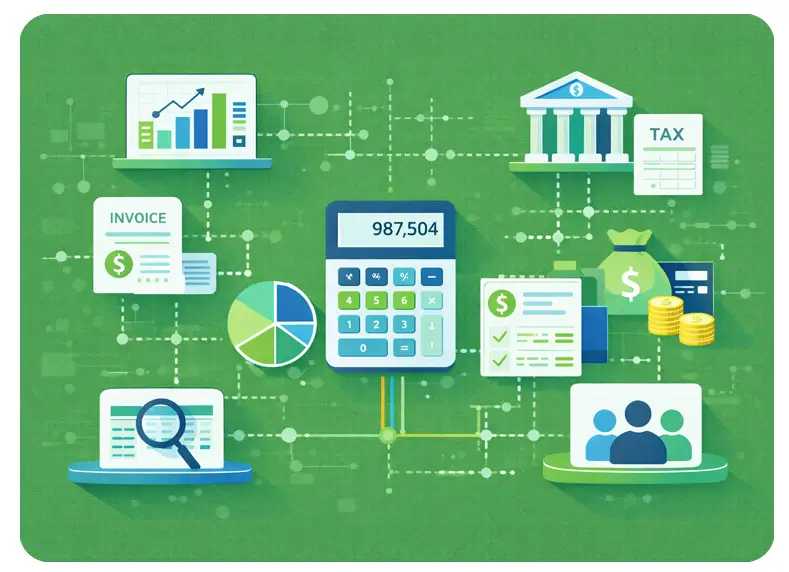
Financial and accounting systems
Use actual cost, budget, and financial control data to support strategic analyses and executive decisions.
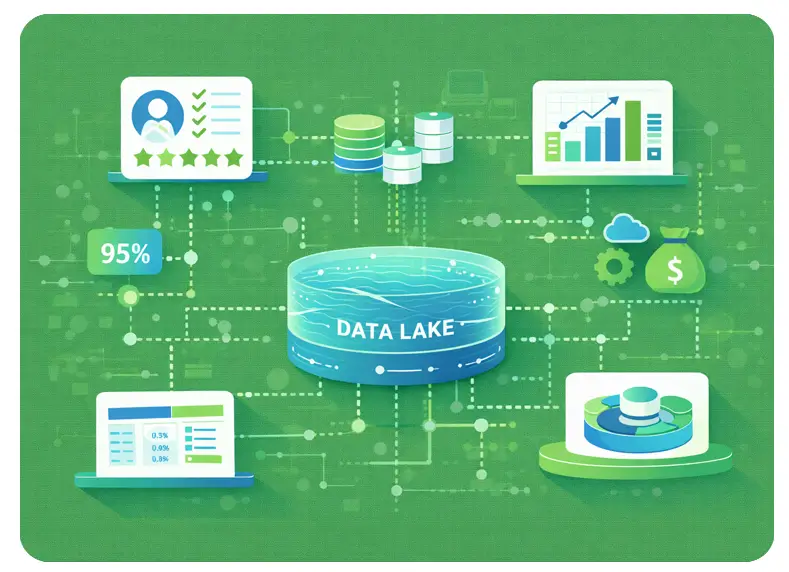
BI, data lakes, and analytics platforms
Expand your analytical capabilities by connecting Actio to BI tools and analytics environments, maintaining consistency between the strategic view and advanced analyses.
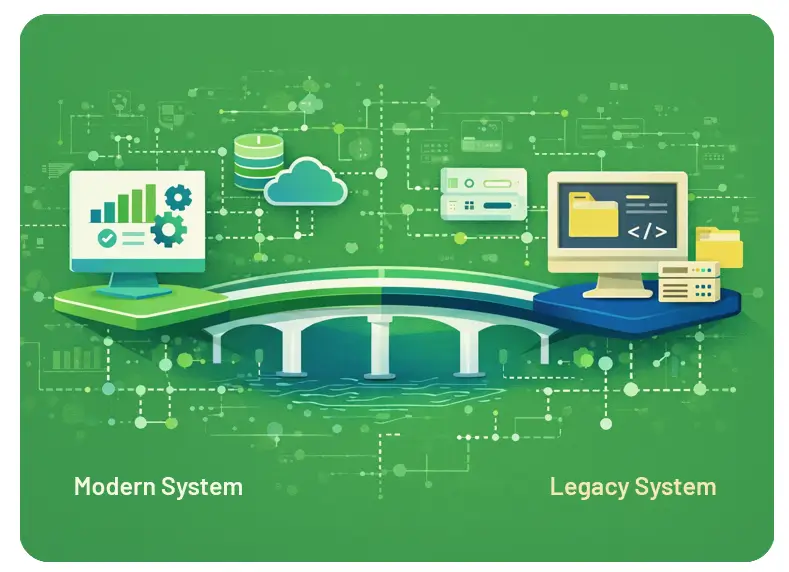
Custom systems and legacy solutions
Integrate internally developed applications and corporate databases without replacing already established systems.
*Actio does not impose specific technologies; integration takes place field by field, according to the agreed data model, whether with SAP or proprietary systems.
Companies that transform their management with the Actio platform





















What your company gets when hiring Actio’s Integrations service
- API integration with ERPs, CRMs, and proprietary systems, ensuring seamless communication across all systems.
- Automatic data flow between platforms, eliminating manual steps and increasing operational efficiency.
- Information consistency across the company, ensuring a single source of truth for strategic decisions.
- Configuration of rules, mappings, and security standards, ensuring data integrity and reliability.
- Comprehensive technical documentation of integrations, facilitating maintenance, auditing, and future expansions.
- Specialized support for the evolution and stability of data flows, ensuring integrations keep pace with business growth.
Across any industry, the impact is immediate!
Gain precision, governance, and speed to operate in complex and dynamic environments.
- Healthcare & Hospitals
- Pharmaceuticals
- Financial Services
- Insurance
- Technology & Software
- Telecommunications
- Education
- Public Sector & Government
- Non-Profit & Foundations
- Retail
- Hospitalidade & Serviços
- Consumer Goods
- Agribusiness
- Manufacturing
- Automotive & Machinery
- Mining & Metals
- Químicos & Petroquímicos
- Oil & Gas
- Energia & Utilidades
- Renewable Energy
- Construction & Engineering
- Real Estate & Infrastructure
- Logistics & Transportation
- Supply Chain & Distribution
- Packaging & Printing
- Food & Beverage Manufacturing
How integrations drive performance across different levels of the organization
Combine this module with other Actio solutions to ensure broader and more efficient management.
C-level
- Ensures an integrated and reliable view of data, enabling strategic decisions based on a single source of truth.
- Accelerates decision-making and reduces risk by eliminating dependence on manual consolidations.
Strategy, Performance, PMO
- Automatically connects indicators to operational systems, ensuring alignment between strategy and execution.
- Frees up time for qualified analysis by replacing operational tasks with higher-value activities.
Operations and Units
- Provides always up-to-date data, enabling quick adjustments and improving day-to-day efficiency.
- Eliminates spreadsheets and rework, reducing errors and increasing productivity.
Finance and Controllership
- Ensures consistency between ERP and Actio, aligning planning, budget, and results.
- Makes analyses faster and more accurate, strengthening governance and predictability.
IT and Data
- Creates documented, secure, and governed API-based flows, simplifying integrations and reducing risks.
- Reduces ad hoc demands, enabling focus on foundational projects and innovation.
Area Managers
- Delivers accurate and up-to-date figures, ensuring reliable performance tracking.
- Improves prioritization and response agility, enhancing day-to-day results.
Need more information?
Dê o próximo passo para integrar e simplificar sua gestão
Get in touch to understand how to structure integrations aligned with your context, priorities, and current maturity level.
Converse com um de nossos especialistas para entender como estruturar integrações alinhadas ao seu cenário, prioridades e nível de maturidade atual.
Frequently Asked Questions
1. What are API integrations and which systems can be connected to Actio?
API integrations are automated connections that allow Actio to continuously exchange data with other corporate systems, without the need for manual actions or recurring imports.
They can be used to integrate ERPs, CRMs, proprietary systems, and, in general, any solution that provides APIs, ensuring real-time information flow and greater data reliability.
2. Why do companies struggle to keep their data consistent before integration?
A large share of organizations operates with multiple independent systems (ERP, HR, spreadsheets, BI, CRM, parallel controls). This results in divergent versions of data, high dependence on manual handling, and delays in updating indicators, goals, projects, and controls. Integration centralizes and automates these flows, eliminating rework and inconsistencies.
3. Which problems are solved by integrating corporate data with Actio modules?
Integration addresses challenges such as:
- Information fragmentation;
- Low KPI reliability;
- Authentication and access control difficulties;
- Lack of standardization across areas;
- Inability to automate alerts, forecasts, and analyses;
- Obstacles in synchronizing structures, employees, and indicators.
As a result, strategic, risk, people, budget, and compensation management operates with unified and auditable data
4. Which integrations are most common among Actio clients?
The most common integrations include:
- ERP and HR systems (employees, areas, goals, production, sales).
- AD/LDAP for user standardization and access governance.
- Power BI for data consolidation and advanced visualization.
- Operational workflows (control, audit, operations, and project systems).
These integrations are essential to ensure that Actio modules operate as a unified corporate management platform.
5. Does integration reduce the operational effort of internal teams?
Yes. Integration eliminates manual activities such as recurring imports, monthly updates of indicators, reviews of organizational structures, and data reconciliation between systems. This frees up team time, allowing focus on analysis, decision-making, and continuous improvement instead of administrative operations.
6. How does integration contribute to corporate governance and compliance?
Integration ensures audit trails, data standardization, advanced security, and automatic updates of structures and permissions. This strengthens management models based on established methodologies such as BSC, OKR, COSO, ISO 31000, among others, by ensuring that decisions are made with data that is accurate, up to date, and traceable.
7. How long does it usually take to implement an integration?
The timeline depends on three factors:
- Quality and availability of the client’s data sources.
- Complexity of the systems involved (ERP, HR, BI, etc.).
- Scope of the processes to be automated.
Simple projects can be completed quickly; more robust corporate integrations, involving multiple areas and processes, require a more structured cycle of design, testing, and validation. In all cases, the Actio team supports the client end to end, ensuring adherence to best management practices.