
Do you know the advantages of corporate risk management? Regardless of the field a company operates in, it will always be subject to risks and events that can harm it. Recognizing this reality is the first step for business leaders to act strategically and intelligently, using methods, actions, and technologies that help reduce these harmful events.
It is in this context that corporate risk management emerges as a practice that directly deals with situations that can harm the company, and aims to minimize losses arising from these threats. However, to better understand what risk management is and what advantages it brings to your company, continue reading our blog!
Ultimately, what is risk management?

Risk management is a procedure that involves the identification, assessment, and control of potential adverse situations that a company may face. These adverse situations, known as risks, encompass various areas, including financial, operational, environmental, and strategic aspects.
The objective of risk management is to mitigate the probability and impact of unwanted events that could harm the organization's operations. Through this process, the company seeks to prevent significant damage and ensure sustainable and stable progress over time.
The importance of a risk management strategy
The implementation of a risk management strategy is of utmost importance for organizations, as it provides for the prevention of future losses and protects the venture. This approach is crucial because a risk management plan empowers companies to establish guidelines for preventing potential threats, reducing damage should such situations occur, and effectively dealing with the resulting consequences.
The ability to understand and control risks provides greater security for companies in their business decisions. Furthermore, by adopting sound corporate governance principles specifically focused on risk management, the organization is better prepared to achieve its objectives consistently.
Key advantages of corporate risk management

The effective implementation of risk management brings a series of advantages to companies. types of risks faced by hospitals:
1- Support for strategic decision-making
Risk management provides a solid foundation for managers' decision-making. By previously identifying and mapping critical areas of concern, leaders can make more informed and well-founded decisions, minimizing uncertainties and increasing the probability of success.
2- Identification of growth opportunities
Despite risk management often being associated solely with problem detection, it is also a powerful tool for identifying growth opportunities. By understanding and addressing potential risks, companies can explore new markets, develop innovative products, and expand their business horizons.
3- Legal and Regulatory Compliance
Maintaining compliance with laws and regulations is fundamental for any business. Risk management aids in this aspect, ensuring that the company operates in accordance with current legislation. This not only avoids legal problems and fines but also strengthens the company's reputation with customers and investors.
4- Improved operational efficiency
By anticipating and mitigating risks, risk management contributes to a more efficient and fluid operation. Well-defined processes and contingency plans allow the company to respond agilely to unforeseen challenges, minimizing disruptions and losses.
5- Cost reduction
Risk management can result in significant long-term savings. Furthermore, by avoiding or mitigating potential problems, companies reduce the costs associated with rework, production losses, and possible legal disputes.
Looking for risk management software? Learn about Actio Risk Management!
6. Shareholder value creation
A well-implemented risk management system not only protects a company's existing value but can also create additional value for shareholders. Furthermore, the ability to effectively manage risks can increase investor confidence and boost stock value.
7 - Culture of Prevention and Resilience
Risk management promotes an organizational culture focused on prevention and resilience. Thus, employees are encouraged to be proactive in identifying risks and seeking solutions.
8- Reinforced reputation and image
A company that demonstrates a solid commitment to risk management offers several advantages, such as the trust of clients, business partners, and stakeholders. Consequently, this can result in a stronger and more positive reputation, which is an intangible asset of great value.
9- Improvement in innovation and development
By understanding the risks associated with innovation and new product development, risk management allows companies to address these challenges more strategically. Furthermore, it fosters creativity and market differentiation.
10- Preparation for changes in the business environment
The business environment is constantly evolving. Risk management prepares a company to adapt to sudden changes, such as technological advancements, economic fluctuations, and global crises.
But, as you can see, risk management goes beyond minimizing potential problems. It is an approach that brings many advantages for growth, strengthens resilience, and creates sustainable value for companies in today's dynamic business landscape.
Risk management should be applied when a significant decision is to be made.

Risk management must be implemented from the beginning of a company's activities and extended to all of its areas. This is because, regardless of the field in which it operates, the company will inevitably face uncertainties and potential negative consequences over time.
Furthermore, even for those companies that have already been operating for some time, it is still viable to apply this approach. The essential thing is that their leaders adopt risk management practices as early as possible.
Thus, the absence of a risk management approach can lead to serious complications in the future. When adverse events arise, the company may find itself unprepared to deal with them adequately. This outcome can have disastrous consequences, including not only financial losses but also the deterioration of the company's performance, credibility, and reputation. Therefore, the proactive adoption of risk management is essential to ensure a solid foundation in the face of uncertainties that may arise.
Rely on risk management software
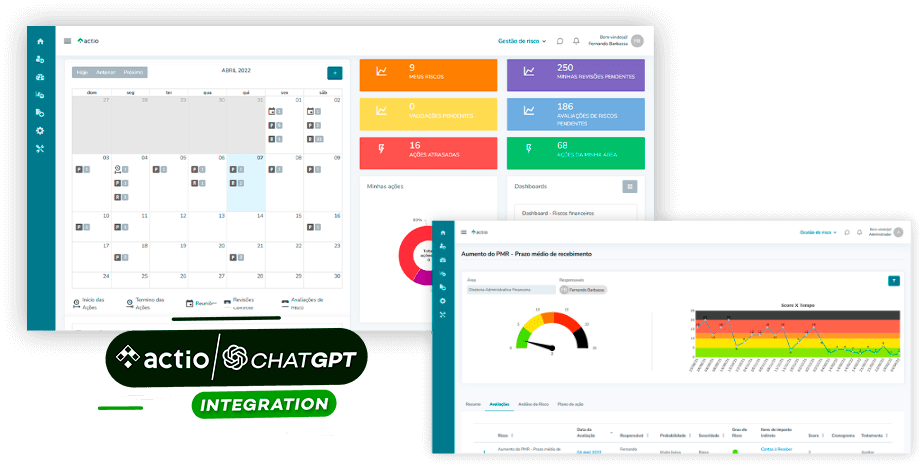
In a scenario where different areas need to work together, it is fundamental to have an organized approach to corporate risk management. One way to do this efficiently is by using tools that track safety indicators, as this facilitates internal company operations.
In this way, the suggestion is to adopt management software that can consolidate and organize all information. With this solid foundation, the company can effectively manage employee health and safety risks. The Actio Risk Management, risk management software, is an interesting option in this regard.
An additional advantage is that Actio Risk Management helps to understand risks in each activity more precisely. This allows for better planning to reduce these risks and implementing controls that truly work.
Like the content? Don’t forget to follow Actio on Instagram, Linkedin and Facebook.