
While it may seem unusual, companies deal with risks on a continuous, daily basis. This is due to the fact that all organizations are susceptible to various incidents, even if they take no action.
But have you ever wondered what enterprise risk management is for? In this blog, we'll explain all the benefits of risk management and how to apply it correctly in a company. Keep reading and understand!
But after all, what is risk management?

Risk management is a structured process that involves identifying, assessing, and prioritizing potential threats that could affect your objectives. Furthermore, this methodology is the practice of anticipating and mitigating problems before they occur.
Why is risk management essential in business?
Risk management plays a fundamental role in an organization's sustainability and growth. Check out some reasons why this practice is crucial below:
Threat protection

The business world is full of uncertainties, and threats can arise in various forms, such as economic crises, natural disasters, fierce competition, and regulatory changes. In other words, risk management helps identify these threats and develop strategies to effectively confront them.
2- Resource Optimization
Financial, human, and material resources are limited, and risk management allows for their efficient allocation. Thus, this means investing in areas that offer a higher return and protecting oneself against unnecessary losses.
3- Informed decision-making
Risk management provides valuable data and information that support strategic decision-making. Furthermore, this action helps leaders understand the implications of their choices and select the most advantageous path.
Looking for risk management software? Meet Actio Risk Management!
4- Regulatory compliance
Many sectors are subject to strict regulations. In this way, risk management helps to ensure that the company complies with laws and regulations, avoiding penalties and damage to its reputation.
What can happen without risk management?
Without a risk management plan, companies are susceptible to significant financial losses. This means they can encounter unexpected situations that directly impact their financial health and organizational structure.
How to implement a risk management system?
Effective implementation of risk management requires a structured process. Check below for the essential steps:
1- Risk identification
The first step is to identify all the risks the organization may face. This includes operational, financial, strategic, and compliance risks.
2- Risk assessment
Once the risks are identified, it is necessary to assess them for the probability of occurrence and the potential impact. Additionally, this action helps prioritize the most significant risks.
3- Development of strategies
Based on the risk assessment, the organization should develop strategies to mitigate or manage these risks. This can involve purchasing insurance, diversifying investments, or improving internal processes.
4- Implementation and monitoring
Risk management strategies must be continuously implemented and monitored. This ensures they are effective and adjusted as needed.
5- Communication and Engagement
It is crucial to involve all members of the organization in the risk management culture. Furthermore, effective communication ensures that everyone understands their responsibility in risk management.
Frequently Asked Questions
1- How can risk management protect my business?
Risk management identifies potential threats and allows for the implementation of strategies to avoid or minimize the impact of those threats. Thus, it protects the company's financial health.
2- What are the most common risks in companies?
The most common risks include financial risks, such as currency fluctuations, operational risks, such as failures in internal processes, and market risks, such as changes in consumer demand.
3- How to start implementing risk management?
Initiating risk management requires forming a dedicated team, identifying risks specific to your industry, and creating a comprehensive plan to mitigate them.
4 - What is risk analysis?
Risk analysis is the process of evaluating identified risks to determine their probability and potential impact. This helps in prioritizing risks.
Meet Actio Risk Management, risk management software
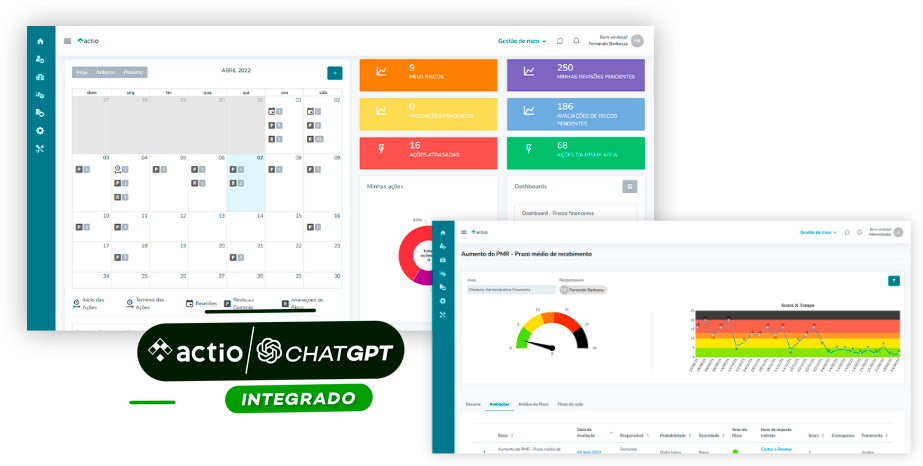
Due to the utmost importance of corporate risk management, we at Actio, a company within the Falconi, group, have developed Actio Risk Management—a software designed to meet your organization’s needs.
With centralized communication, this software can be a valuable tool for tracking actions, creating risk matrices, mitigation plans, and more.
Success stories,; such as how the Oswaldo Cruz Hospital already uses risk management software to improve business performance, demonstrate that Actio Risk Management allows for creating better plans to reduce these risks and implement effective controls. Take advantage of the opportunity to enhance your business’s competitive advantage.
Like the content? Don’t forget to follow Actio on Instagram, Linkedin and Facebook.