
In the competitive business world, understanding and managing threats is an indispensable pillar for the success of any venture. Risk mapping emerges as a strategic tool in this scenario, offering a clear framework for identifying and organizing the challenges that can compromise an organization's stability and results.
Want to understand the essential aspects of this methodology and how it can elevate your company's institutional security? Continue reading to learn how to strengthen risk management in your business and implement processes that ensure resilience in the face of market uncertainties!
Risk mapping is the process of identifying, assessing, and visualizing potential risks that an organization or project may face. It helps to understand the likelihood and impact of these risks, and to prioritize mitigation efforts.

In summary, we can say that the risk mapping it is the process of identifying, analyzing, and evaluating events that could compromise a company's objectives. In practice, it functions as a diagnosis to anticipate vulnerabilities, allowing managers to understand threats, probabilities, and their impacts on operations.
These threats arise from various factors. They can be external, such as economic crises, or internal, such as process and technology failures. By structuring this data, mapping becomes an intelligence tool. In other words, it is an essential step to ensure the long-term sustainability of the business.
What is risk mapping used for?
In a nutshell, the central purpose of risk mapping is to enable the company to anticipate and neutralize threats before they become critical problems. Thus, by understanding the business's vulnerabilities, the organization stops merely reacting to crises and begins to act with a focus on prevention and operational continuity.
Check out the main functions of this tool:
- Assertive decision-making: providing solid data for managers to choose safer paths.
- Loss prevention helping to avoid financial losses, fines, and damage to brand reputation;
- Action prioritization allowing resources to be focused on risks with the greatest probability or impact;
- Increased resilience preparing the team to handle unforeseen events without interrupting essential activities;
- Legal certainty and compliance: ensuring the company is in compliance with industry standards and regulations.
However, that's not all: risk mapping and management still bring many advantages to companies. Learn more in the topic below!
What is the importance of risk mapping?
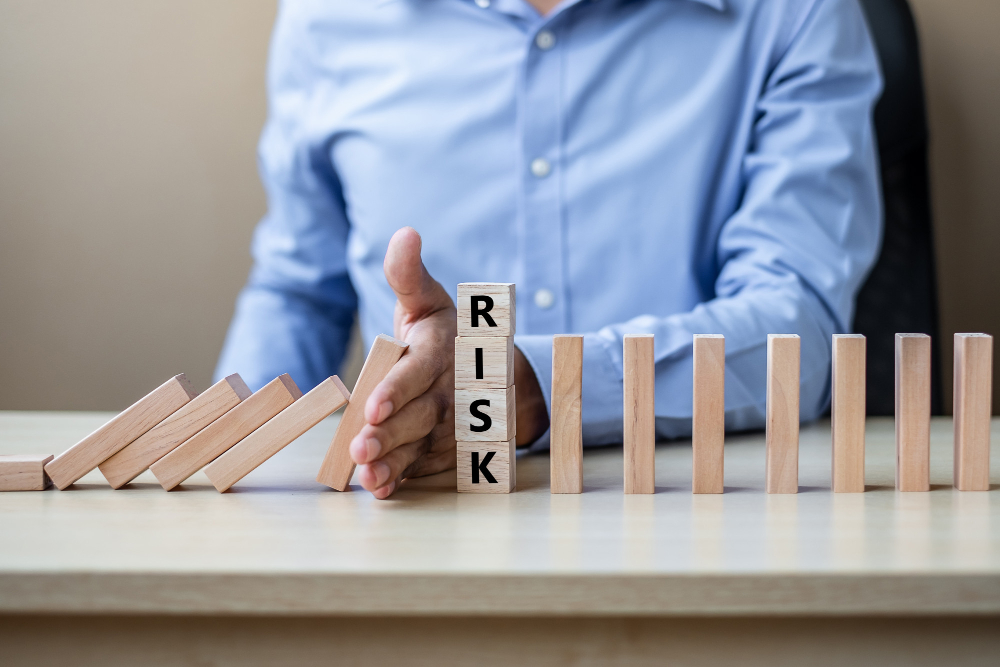
Now that you know what risk mapping is and its usefulness, it's crucial to understand the practical gains of this strategy. After all, by adopting organized and standardized management, the company obtains benefits that directly impact its results.
Check out the most relevant advantages for your business below:
1 – Reduction of losses
The primary objective of risk management is to enable the company to conduct a predictive analysis of all processes and situations that occur or may eventually occur.
Thus, risk mapping can avoid a large part of the negative consequences and minimize the impacts of what cannot be avoided.
2 – Increased productivity and agility of teams
Another significant benefit of risk management is increased team productivity by eliminating potential process barriers. In addition, of course, to highlighting areas for improvement that generate more opportunities for gains.
Thus, sectors operate more agilely and efficiently.
3 - Informed Decision Making
Risk mapping provides crucial data for informed decision-making. Thus, with this information, managers can choose strategies that consider identified threats, reducing the margin of error.
Furthermore, this clarity allows leadership to anticipate scenarios and act with much greater confidence on a daily basis.
4 – Strengthening Compliance and Governance
Risk mapping ensures that the company operates in full compliance with the laws, technical standards, and regulations of its sector. Thus, by identifying legal or operational vulnerabilities, management can implement controls that prevent fines, lawsuits, and administrative sanctions.
This way, the organization strengthens its image with the market and regulatory bodies, conveying much more confidence to investors and clients.
5 – Ensure the safety of employees
Finally, the role of risk management in occupational safety is highlighted, responsible for accident prevention and other related responsibilities.
Risk mapping directly contributes to preserving the health and safety of employees, identifying critical points and implementing the necessary measures to protect people and company assets.
Examples of risk mapping

Risk mapping is a fundamental practice in various sectors. Therefore, below, we will highlight some specific examples of how risk mapping can be applied in each of these contexts:
Hospital
Actio’s Hospital risk mapping is crucial for ensuring the safety of patients, staff, and visitors. In this case, risks can include adverse events related to medical procedures, hospital infections, lack of safety equipment, among others.
This way, identifying and classifying these risks allows for the implementation of preventive measures, such as strict hygiene protocols, adequate staff training, and regular maintenance of medical equipment.
Laboratory
Laboratories deal with chemical substances, biological agents, and complex processes. Therefore, conducting risk mapping is essential to prevent accidents, leaks, or contamination.
Furthermore, effective risk mapping aids in the implementation of safe practices, regular staff training, and preventive equipment maintenance.
Companies
In a business context, the Risk mapping covers several crucial areas, These include financial, operational, reputational, and legal risks. And within the context of financial risks, it is essential to consider economic fluctuations, operational challenges, and possible failures in key processes.
Reputational risks, in turn, can arise from poor crisis management, threatening the company's image and credibility.
Furthermore, legal risks are intrinsically linked to regulatory compliance. In these cases, mapping helps in the implementation of internal controls, regulatory compliance and strategies to preserve company reputation.
How to perform risk mapping in 5 steps?
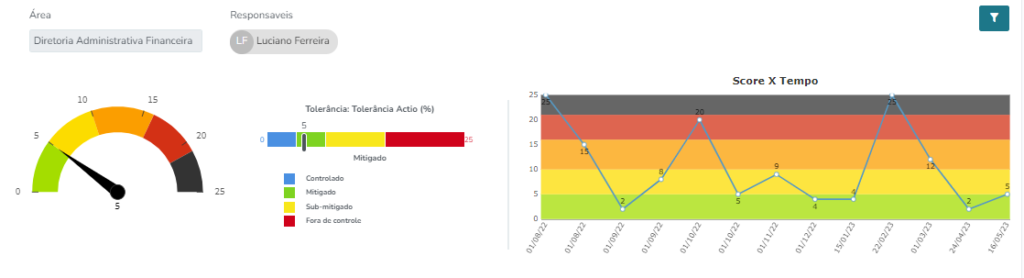
As we've seen, the success of preventive actions depends on a deep understanding of the threats surrounding the business. Therefore, to put this theory into practice, it's necessary to follow a structured method that organizes information and facilitates management.
Here are five essential steps to simplify risk mapping implementation and ensure greater security for your operation:
1 – Risk Identification
First, it's necessary to identify the specific risks that can affect the company. This includes external threats, such as market changes, and internal factors, such as operational processes.
2 – Probability and Impact Assessment
After identifying threats, it is necessary to measure the real chance of each event occurring and the potential impact on operations. This analysis allows for the creation of a prioritization matrix, ensuring that managers focus their resources and efforts on the most critical and urgent risks.
Thus, by crossing these two factors, the company stops treating all problems with the same intensity, optimizing team time and the allocation of security investments.
3 – Development of mitigation strategies
With a clear view of the risks, the next step is to define action plans to neutralize or reduce their impacts. These strategies can range from adjusting internal processes and investing in technology to diversifying resources.
Next, by implementing these measures, the company gains resilience and operational security. This ensures that, even in the face of unforeseen events, the business has tools ready to respond quickly and efficiently.
4 – Automation and communication of risks
For mapping to be efficient, data cannot remain isolated. And using technology to automate monitoring allows alerts to be generated in real time, facilitating a rapid response.
Furthermore, clearly communicating these risks to the involved departments ensures that everyone knows how to act preventively.
5 – Continuous Monitoring
Finally, remember that risk mapping is not a one-time task: it is an ongoing process. In other words, closely monitoring identified risks ensures that mitigation strategies remain relevant and effective.
Meet Actio Risk Management, risk management software
As we've seen, risk mapping is an indispensable tool for any company seeking not only to survive but also to thrive in a competitive market. After all, by understanding what this methodology is and how to apply it, you ensure the knowledge necessary to make informed decisions and protect your organization's future.
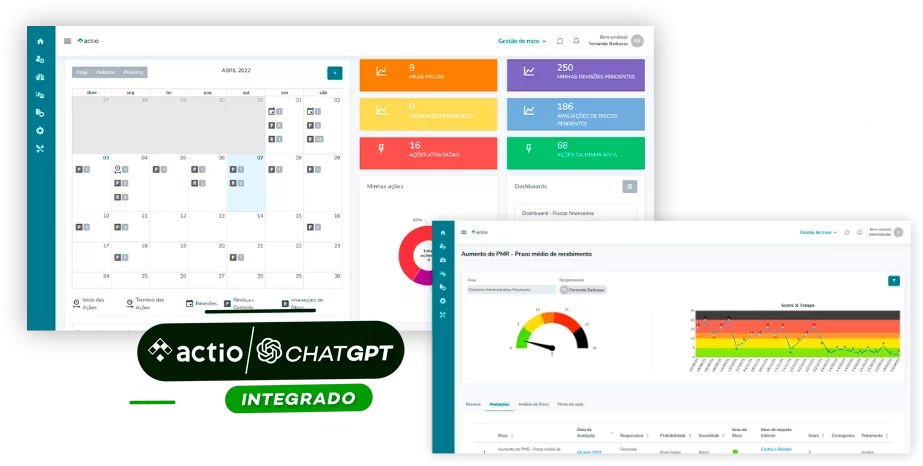
Aware of this importance, Actio, a company in Falconi Group, developed the Actio Risk Management, software designed specifically to meet risk management needs. Thus, with it, your company gains a valuable tool to create risk matrices, track mitigation plans, and monitor actions in real time.
Major success stories, like the German Oswaldo Cruz Hospital, are already using Belt to enhance business performance and refine their internal controls. This is because the technology allows for the design of more effective plans and the implementation of measures that truly work in practice, generating a crucial competitive advantage.
Do you want the same for your company? Don't miss this opportunity to strengthen your business's security and elevate your management to a new level of excellence. To follow more content like this and stay on top of best management practices, follow Actio on LinkedIn and Facebook.
Did you enjoy the content? Share your opinion with us in the comments below!
Frequently Asked Questions about Risk Mapping
Check out some of the most common questions on the topic below:

The responsibility for developing the risk mapping falls on a multidisciplinary team, involving professionals from occupational safety, project management, human resources, among others.
Furthermore, the collaboration of various sectors contributes to a comprehensive and accurate analysis of the risks involved.
ISO 31000 is fundamental for risk management, providing internationally recognized guidelines and principles.
In this way, it establishes a framework that assists organizations in identifying, assessing, and treating risks, promoting a systemic and effective approach.
Performing periodic reviews of the risk map offers several benefits. Firstly, it allows for the identification of new risks that may arise due to internal or external changes in the organization.
In addition, regular evaluation helps ensure that mitigation strategies are aligned with evolving organizational objectives.