Visual management is an excellent internal communication tool, helping to create a results-oriented organizational culture.
Spot management is a way of making visible the key elements of management, which are the goal, the action plan and the status of both. However, the purpose of spot management goes beyond simply publicizing these elements: it seeks to share management, serving as a resource for critical analysis, a permanent point of attention and a way of obtaining involvement and commitment. In this way, it contributes to monitoring and redirecting organizational direction, providing transparency of results.
When it expands to become a communication tool, not only for management, but also for HR information, internal communication and the acculturation of the company's beliefs and values, the scope of this functionality expands in institutions.
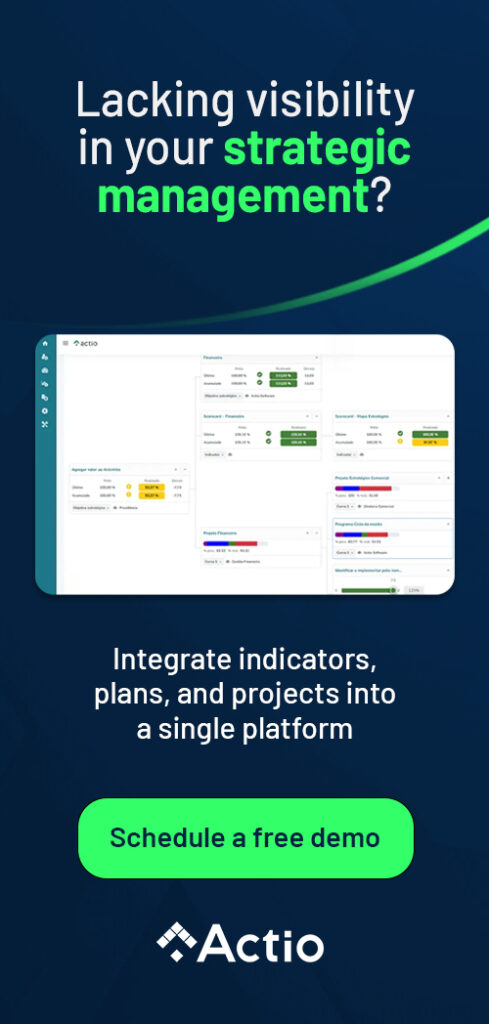
According Guilherme Barbassa, director of Actio, visible management boards are usually located next to the organization's internal communication bulletin boards. This is where the idea of combining the functionalities came from. “Since we developed an electronic tool for visible management in the software Actio Strategy ManagementIt was unbalanced to have a traditional mural next to an LCD monitor. As the technology was available, and due to demand from some clients, we integrated the two solutions into a single tool," he says. With the software in question, visual management evolves into dynamic presentations, interspersing graphs for monitoring targets and projects with messages and videos, capturing employees' attention to the results.
It is known that using communication in harmony with corporate strategic planning is a concrete way of making it possible to achieve the goals set by the organization. Good or bad results are directly related to the organization's day-to-day decision-making and therefore need to be seen and communicated to the entire company.
According to Barbassa, cash management has traditionally been used as a tool for transparency of company results. By publishing the achievement of targets and the status of projects, it ends up generating a results-oriented organizational culture, because "nobody likes to see their unachieved targets exposed to everyone", he jokes. But in addition to the traditional way of using management at a glance, in the software, managers can create dashboards in any way they like and can include announcements, messages, videos guiding the president, interspersed with the organization's results.
In addition, dashboards can be configured by area. For example, in a shared services center, the indicators for that area are displayed. The CEO's office, on the other hand, can display the organization's strategic maps, goals and projects. "You can work with dashboards with differentiated information. The software has this option. You can create different dashboards and choose where what will appear," Barbassa explains.
To find out more about the software and the Vista Management function request a presentation of our system.