Many organizations make the mistake of treating all problems with the same urgency, which leads to team burnout and wasted capital. Therefore, when modern risk management demands prioritization, the 4x4 risk matrix emerges as the ideal solution to this challenge.
Thus, through an intuitive visual model, it allows for the categorization of everything from minor operational failures to crises that could compromise business continuity. But how do you take this tool from concept to daily application? What defines a 4x4 matrix compared to other models?
Follow along with Actio and explore every detail of this methodology, which is a key piece for those seeking security, predictability, and data-driven decision-making, rather than just intuition. Ready?
What is a risk matrix?
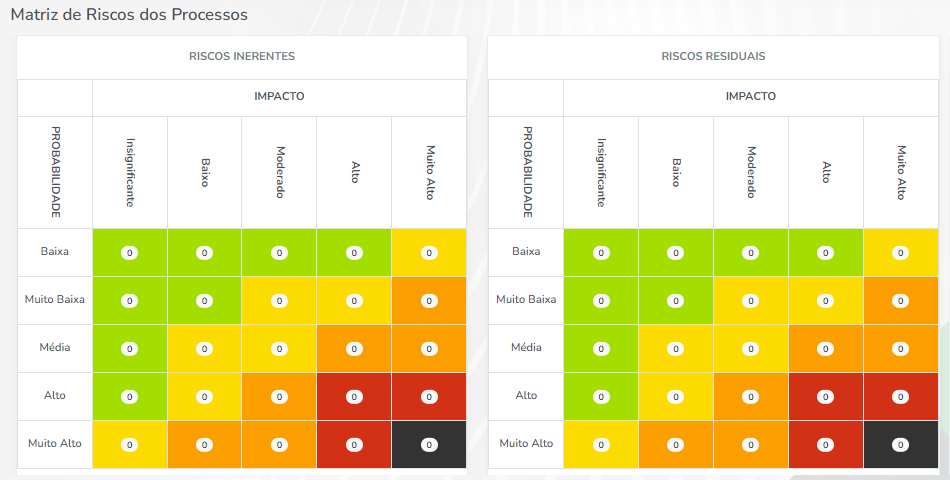
The Risk Matrix, also called the Probability and Impact Matrix, is much more than a chart. After all, it is a strategic visual tool that allows you to identify which threats require immediate attention and which can be monitored.
However, for it to work, planning is essential. This is because the application of the matrix occurs in the evaluation phase, which requires a prior and detailed identification of each potential risk. Without this foundation, the tool loses its precision.
In other words, the great differentiator of this methodology lies in its capacity for synthesis. By transforming complex data into clear visualizations, it facilitates understanding for the entire team. This increases collective engagement, ensuring that risk management ceases to be just a bureaucratic task and becomes part of the organizational culture.
But, after all, what is the 4x4 Risk Matrix?
Briefly, the risk matrix can be categorized in several ways, such as 3x3, 4x4, and 5x5. However, each of them has its own characteristics. The main difference of the 4x4 risk matrix lies in its visual nature, employing a Cartesian plane to identify the risks present in an organization.
In other words, it is named that way due to its composition of four quadrants, each representing a unique combination of probability and impact of the identified risks.
In addition, this tool offers a visual approach that makes it easier to understand the interaction between these critical factors.
When to use the 4x4 Risk Matrix?

Knowing when to use the 4x4 Risk Matrix is what separates reactive management from proactive leadership. After all, although it is a versatile tool, its application is most valuable in times of transition or high operational complexity.
This is because the central objective is to transform a list of uncertainties into a visual and prioritized action plan. In other words, this methodology is used, above all, when the organization needs an objective criterion for allocating resources and time.
Understand below some situations where you can use the 4x4 risk matrix:
1 – Project Planning
The phase of planning it is the foundation of any successful initiative. At this stage, the 4x4 Risk Matrix acts as a strategic radar, allowing the team to identify and assess potential threats before they even become real problems. Thus, instead of just listing generic concerns, the tool forces a critical analysis of what could compromise the schedule and budget.
However, that's not all: besides mapping vulnerabilities, this methodology promotes fundamental alignment among those involved. This is because it helps the team understand the technical and operational challenges that may arise, facilitating the creation of robust contingency plans. Thus, with this clear vision, management can anticipate solutions and mitigate risks more safely, demonstrating professionalism and control over project execution.
2 – Risk prioritization
Not all threats carry the same weight, and trying to treat them all with the same urgency is a common mistake that leads to wasted resources. The 4x4 Risk Matrix solves this problem by offering an objective classification criterion, crossing the probability of occurrence with the severity of the impact. In this way, this visual organization allows management to separate occasional disturbances from potential crises, bringing focus to what really matters.
This intelligent prioritization not only protects project success but also optimizes the team's response time. Thus, with the most dangerous risks properly mapped and prioritized, decision-making becomes much more agile and assertive in the face of any unforeseen event.
3 – Risk Communication
The 4x4 Risk Matrix is one of the most effective ways to align expectations between different departments and hierarchical levels. After all, as a visual tool, it synthesizes complex data into an easy-to-interpret format, eliminating communication noise. This is crucial when you need to present project status to directors or investors who are looking for a quick, yet precise, overview of current challenges.
In other words, besides simplifying understanding, the use of matrix demonstrates transparency and professionalism on the part of management. Thus, by sharing this visual map with all stakeholders, you ensure that everyone is aware of the priorities and security measures adopted.
4 – Decision Making
The 4x4 Risk Matrix is not a static document, but a living guide that accompanies the entire project lifecycle. This means it should be revisited periodically to reflect changes in the external environment or new technical discoveries by the team. This constant updating ensures that management does not make decisions based on old snapshots of the business, but rather on the current reality of threats and opportunities.
Thus, instead of acting on intuition, leadership uses concrete data to decide where to invest more time or when to change an operational route. This process transforms risk management into a competitive advantage, ensuring that each move is calculated and based on facts.
5 – Monitoring and continuous improvement
In addition to resolving immediate crises, the 4x4 Risk Matrix is a powerful tool for long-term organizational learning. This is because when used continuously, it allows the company to identify patterns of recurring failures across different projects or sectors. This data history is valuable for adjusting internal processes and preventing past mistakes from compromising the organization's financial or operational health again.
This way, the tool ceases to be just a safety checklist and becomes a pillar of excellence culture.
How to apply the 4x4 Risk Matrix in 7 steps?
Now that you know the 4x4 risk matrix is a visual tool that helps identify, assess, and manage project risks. But how do you apply it? Check out the step-by-step guide below on how the methodology works:
1 – Identification of risks
The starting point for any efficient management is the collection phase, where it is essential identify all events that could impact the project. After all, these risks are not just potential problems: they can arise from both internal and external sources, presenting themselves as negative threats or even as positive opportunities.
Therefore, for this step to be truly effective, it is recommended to use techniques such as brainstorming with the team or analyzing the history of similar projects. The goal is to create an exhaustive and detailed list, ensuring that no vulnerability goes unnoticed. Thus, by documenting these variables early on, the organization gains a solid foundation for subsequent steps, transforming abstract uncertainties into concrete items that can be precisely monitored and managed.
2 – Probability
At this stage, probability comes into play to quantify the actual chances of a risk materializing during the project's lifecycle. In other words, more than a guess, this analysis should be based on historical data, the team's previous experiences, and market indicators.
This way, each identified risk undergoes a careful evaluation, where the team discusses how frequently that event could occur.
3 – Impact
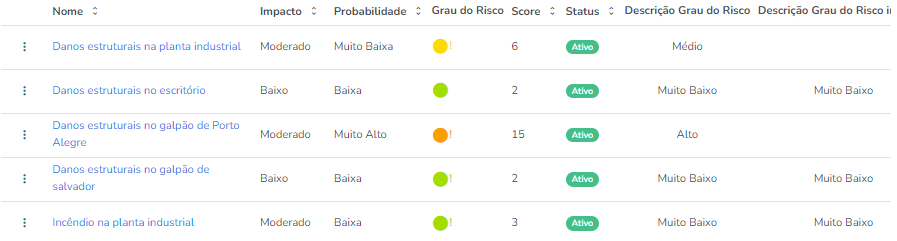
Along with probability, impact represents the magnitude of the effects should a risk materialize. Thus, while probability measures the chance of occurrence, impact focuses on the severity of the consequences for the project, whether in financial, operational, or reputational terms. In the 4x4 Matrix, this metric is essential for defining the severity of each threat, allowing managers to visualize the true depth of the damage.
Thus, by assigning a specific weight to each risk, the team can differentiate between failures that cause only minor delays and catastrophic events that could paralyze the organization. This careful analysis is what brings balance to the matrix, ensuring that the contingency plan is proportional to the size of the identified challenge.
4 – Matrix construction
The 4x4 risk matrix is formed by four quadrants. In them, probability is represented on the horizontal axis and impact on the vertical axis. In other words, at this stage, these quadrants are labeled as follows:
- Quadrant 1: High Impact and High Probability (Critical Risks);
- Quadrant 2: High Impact and Low Probability;
- Quadrant 3: Low Impact and High Probability;
- Quadrant 4: Low Impact and Low Probability.
5 - Risk Prioritization and Response
With the matrix duly filled, the next step is strategic prioritization based on the position of each risk in the quadrants. And events located in the critical zone, where probability and impact are high, demand immediate attention and robust action plans to avoid severe damage.
This visual organization allows leadership to see, in seconds, which threats could paralyze the project and which require priority investment of time and capital.
However, management is not limited to critical risks. After all, the items positioned in the other quadrants also undergo careful evaluation and are addressed according to their priority order.
6 – Continuous Monitoring
Finally, it is worth noting that the 4x4 risk matrix is not a static tool. For this reason, it should be revisited and updated regularly as the project progresses and new information about the risks becomes available.
This practice ensures the project team is always aware of changes in risk conditions, allowing for adjustments to response strategies as needed.
7 – Lessons Learned and History Log
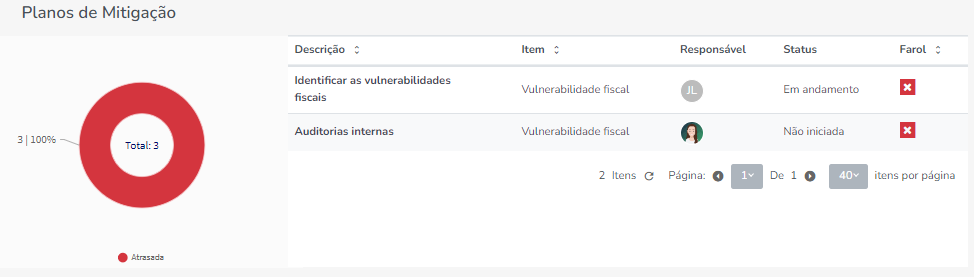
Unlike what many think, the success of risk management it doesn't end with project completion, but rather with documentation. Therefore, recording how each risk behaved and the effectiveness of the response strategies creates a valuable intellectual asset for the organization.
This history allows the team, in future initiatives, to avoid “reinventing the wheel,” using real data from past projects to fill out the 4x4 Risk Matrix with much greater accuracy and speed.
Thus, besides serving as technical consultation, maintaining a detailed record strengthens transparency with investors and auditing bodies. This process transforms individual experience into organizational knowledge, ensuring that every challenge overcome becomes a competitive advantage for the sustainable growth of the business.
Meet Actio Risk Management, risk management software
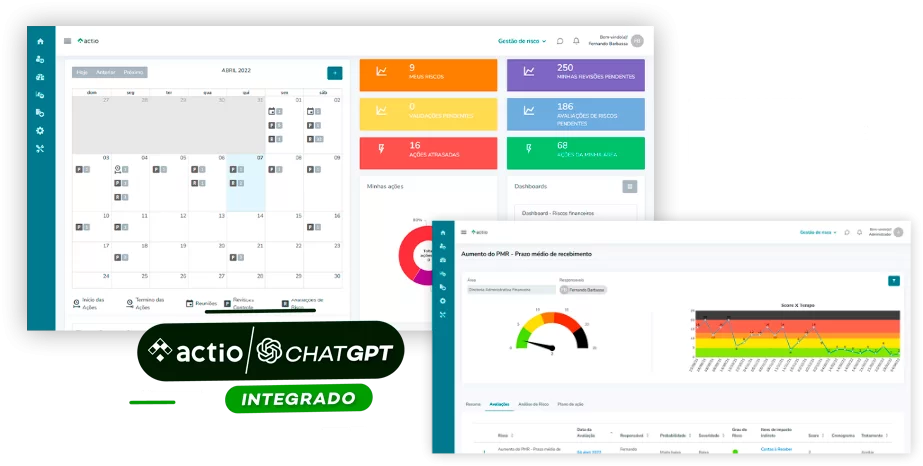
As we've seen, the 4x4 risk matrix is an indispensable tool for companies seeking a proactive, data-driven approach. This is because by understanding how it works and applying the steps detailed in this guide, your organization not only reduces vulnerabilities but also opens doors to strategic opportunities that would otherwise go unnoticed.
And to raise that security level, technology is your greatest ally. Actio Risk Management, risk management software developed by Actio (a company from Falconi Group), was designed specifically to centralize your communication and automate the creation of matrices, mitigation plans, and real-time action tracking.
Major success stories, such as the Oswaldo Cruz Hospital, already use Actio Risk Management to boost your business performance and implement controls that truly work. Thus, by adopting a robust solution, you ensure more assertive plans to reduce risks and build a sustainable competitive advantage for your business.
Did you like this content or do you have any questions about how to apply the matrix in your day-to-day life? Leave your comment below!
Frequently Asked Questions: 4x4 Risk Matrix
Check out some of the most common questions on the topic below:

Resistance to change, lack of precise data for risk assessment and difficulty in assigning specific values to probability and impact.
In addition, effectively integrating the matrix into existing processes can also be a challenge; requiring careful planning and stakeholder awareness.
Although there is no single model, it is possible to follow a basic structure. In other words, you need to identify the axes of probability and impact, define scales for each one and assign risks to the corresponding quadrants.
Customization is essential to adapt the matrix to the particularities of each context, project or organization.
The 4x4 risk matrix is a crucial tool for strategic decision-making as it provides a clear visual representation of risks. Thus, by positioning risks in quadrants based on probability and impact, organizations can focus on high-risk areas.