Feedback is the compass of any corporate environment. After all, more than a simple evaluation, it's the mechanism that calibrates expectations and ensures that every delivery aligns with the organization's objectives. In other words, regardless of position or company size, feedback is what separates mechanical execution from strategic growth.
However, the effectiveness of this tool lies in the details: giving assertive feedback requires mastery of the right timing, appropriate tone, and the most efficient communication technique for each profile. Thus, when applied well, it ceases to be a moment of tension and becomes a driver of trust and continuous evolution. But how can this be done strategically?
Keep reading and find out. In this article, we will explore the essential techniques and strategies for transforming feedback into a competitive advantage for your leadership. Happy reading!
What is feedback?

In short, feedback is the exchange of information between individuals, where one evaluates the other regarding their actions, behaviors, and tasks. This practice plays an essential role in personal and professional development, being commonly applied after performance reviews to create individual development plans (IDPs).
Thus, through this evaluation, individuals have the opportunity to identify strengths and areas for improvement, driving a continuous process of learning and growth. In other words, feedback is a crucial tool for increasing team engagement and productivity.
In practice, feedback acts as a strategic mirror: it reveals blind spots and talents that the employee themselves may not have noticed. In summary, feedback is the link that connects individual potential to the organization's collective success.
What is the importance of feedback in organizations?
As we have seen, the importance of feedback lies in its ability to transform organizational culture into an ecosystem of continuous improvement. That is, it is not just a routine dialogue, but a strategic compass that aligns employee behavior with the company's vision.
Thus, when structured correctly, feedback directly acts on vital pillars, such as:
- Recognition and valorization validates good performance, turning correctness into a standard to be followed and increasing the sense of belonging;
- Expectation alignment: ensures the professional knows exactly what the company expects from them, eliminating assumptions and communication noise;
- Gap identification acts as an accurate diagnostic to identify blind spots and areas for improvement, allowing for course corrections before minor errors become major losses;
- Professional growth provides inputs for the development of technical and behavioral skills, boosting the talent's career and the team's maturity;
- Psychological safety: When constructive and transparent, feedback creates an environment of trust where mistakes are seen as learning opportunities, not just failures.
In summary, feedback is the fuel of results-based management. It removes leadership from subjectivity and places it in the realm of evidence, ensuring that the impact of each collaborator is maximized.
Types of feedback

Unlike what many people think, there are several types of feedback that can be applied to a team to promote the development and improvement of activities.
and their respective utilities:
1 – Positive Feedback
Positive feedback recognizes and encourages behaviors that drive team results. Therefore, by valuing achievements and superior performance, the organization boosts motivation and solidifies standards of excellence that should be replicated. This direct recognition strengthens engagement and signals which attitudes are fundamental to the company culture.
In summary: what is recognized, is repeated.
Also read: Positive and negative feedback
2 – Constructive feedback
Actio’s Constructive feedback provides insights and guidance for improvement, highlighting strengths and improvement areas.
In other words, it's an opportunity for the employee to understand how they can grow and develop their skills. In addition, of course, to receiving suggestions for improving their performance and contributing more effectively to the team's goals!
3 – Negative feedback
Negative feedback is delicate and should be delivered with sensitivity and empathy. It addresses performance or behavioral issues that need to be corrected.
Therefore, when providing negative feedback, it is important to focus on specific actions or outcomes, offer clear suggestions for improvement, and demonstrate support. Only in this way can the employee overcome challenges and achieve better results.
The main mistakes when giving feedback
Avoid common mistakes when giving feedback It is essential for maintaining the health of the organizational climate and team efficiency. After all, when communication fails, what should be a tool for growth becomes a bottleneck of demotivation.
Check out the main mistakes to avoid:
- Focus on the person, not the behavior: The biggest mistake is turning feedback into something offensive, using destructive criticism and personal disqualifications. This attacks the employee's self-esteem and creates a toxic environment, instead of focusing on what truly needs to be corrected technically or professionally.;
- To be vague or generic: Feedback without concrete examples leaves the employee confused. Simply saying something “is bad” without pointing out facts and data prevents the professional from understanding where they went wrong and how they can improve.;
- Accumulating feedback (The “Dam Effect”): Saving criticism to be addressed all at once, months after the event, removes the opportunity for immediate correction and generates a feeling of injustice.;
- Not offering an action plan Pointing out an error without suggesting a path to a solution is just a complaint. Effective feedback should be accompanied by clear guidance and support for development.;
- Choosing the wrong time or place Giving negative feedback in front of other colleagues exposes the employee to ridicule. Remember: correction should be done privately, while praise can (and should) be public.;
- Lack of active listening: Feedback should not be a monologue. Ignoring the collaborator's version or not giving them space to explain themselves prevents the building of a relationship of trust and respect.
How to Give Strategic Feedback in 5 Steps?
For feedback to stop being a bureaucratic obligation and become a performance driver, leadership needs to master the art of delivery. After all, the effectiveness of this practice lies not only in the content but also in the strategy used to communicate it.
Check out five fundamental steps to apply feedback intelligently and professionally:
1 - Reflect before giving feedback
First and foremost, before providing feedback, it is crucial for managers to carefully reflect on the nature of the feedback they intend to offer. This involves considering whether the evaluation is genuine, whether it will be useful for the employee and the company, and whether it aligns with organizational objectives.
Furthermore, adequate reflection helps ensure that the evaluation is constructive and well-received.
2 – Turn the feedback into something regular
Giving feedback immediately after a specific situation is more effective than delaying it. This is because delays can cause details to be lost and reduce the relevance of the evaluation.
Therefore, making feedback a regular practice is essential, integrating it into the company’s culture. This creates an environment where employees expect and value insights to improve continuously.
3 – Be clear in your observations
Clarity is fundamental when providing feedback. Therefore, managers should communicate precisely and directly which points need improvement or recognition.
Additionally, avoiding ambiguities and vague language helps the employee understand exactly what is being discussed and what actions must be taken.
4 – Give improvement tips
In addition to identifying areas for improvement, feedback should include concrete and practical suggestions on how the employee can progress.
Moreover, this action may involve offering additional training, resources, or specific guidance on addressing the identified challenges. Constructive tips help employees develop skills and enhance their performance.
5 – Recognize positive performance
Finally, know that recognizing good work is as important as pointing out areas for improvement. This is because positive feedback motivates employees, reinforces desired behaviors, and builds a culture of appreciation and recognition within the company.
In other words, publicly recognizing employees' achievements helps to strengthen team morale and promote a positive and productive work environment.
Discover Lift by Actio, performance management software
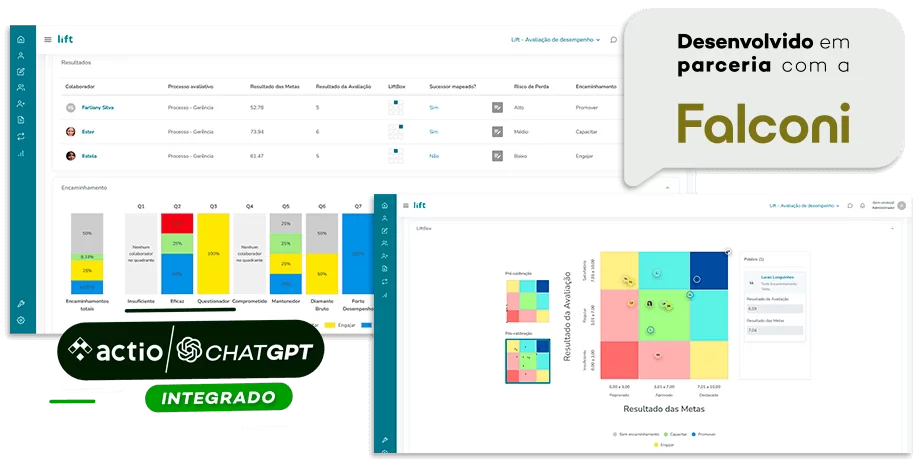
To unite technology and a results-oriented culture, Actio and Falconi have developed the Lift by Actio, software designed to revolutionize people management. The tool automates complex processes, such as subordinate, peer, and self-assessments, in addition to facilitating talent calibration and the creation of succession maps. Thus, with it, your company transforms subjective data into strategic and secure decisions.
Lift's main differentiator is its high adaptability, allowing each feature to be customized according to your business's reality. This way, by centralizing this information, the software ensures that the feedback culture is continuous and transparent, eliminating operational bottlenecks and strengthening trust.
Did you like the tips on how to use feedback for individual growth and organizational success? Start transforming your management today and don't forget to follow Actio on LinkedIn and Facebook!
Frequently Asked Questions about Feedback
Check out some of the most common questions on the topic below:
The ideal is for it to be continuous. Therefore, don't wait for the annual review: the closer to the event the feedback occurs, the more effective the course correction or reinforcement of success will be.
Stay calm and reinforce the facts and indicators. If resistance persists, try to understand the reason behind it and reaffirm that the goal of the conversation is his and the team's growth.
Transform the conversation into an Individual Development Plan (IDP). Additionally, define clear goals, timelines for improvement, and schedule a date to review progress.