To achieve success and reach the desired goals, it is essential to have efficient strategic management. However, developing strategic planning can be a challenging task. Fortunately, there are several strategic management tools available to make this process more practical and effective.
With this in mind, in this post we're going to present the five best strategic management tools that will help you boost your business. In addition, we'll discuss how multi-methodology software can be a great ally in your strategic tasks. Have a good read!
OKRs
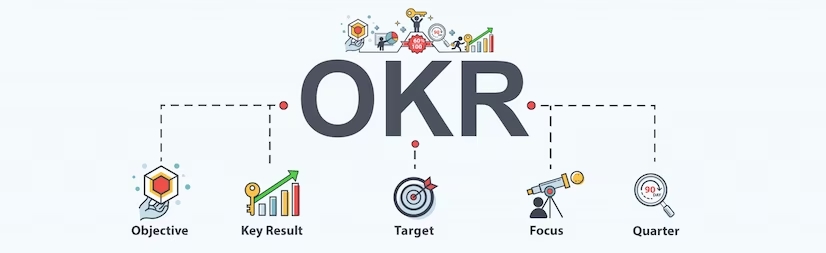
OKR (Objectives and Key Results) is an innovative strategic management tool that stands out for its simplicity and effectiveness and has been widely adopted by high-growth companies such as Intel, Google, LinkedIn, Amazon and many others.
In this tool, goals are set in a clear and objective way, boosting collaboration between team members. Each objective is then accompanied by key results, which are specific indicators to assess progress towards the goal.
How to use OKR?
First of all, it's important to define the key results and think about the actions needed to achieve your company's objective. Generally, between 3 and 5 key results are established for each objective.
In addition, it can be useful to assess the tasks required to achieve each key result. Although not mandatory, establishing the necessary tasks provides a more detailed framework for achieving the key results.
For example, if one of the key results is to "grow the customer base by 15%", some related tasks could be to make daily prospecting calls, send emails with promotional coupons and reduce the price of the product.
It is also interesting to involve the work team in defining the OKRs, but remember: it is recommended that 60% of the OKRs are defined by the employees responsible for their activities, while the rest are set by the board and managers. In addition, it is important that the main objectives, which generally have a longer timeframe, are broken down into quarterly results for weekly monitoring.
By carrying out these tasks, key results are expected to be achieved, leading to the fulfillment of the company's main objective. This creates a culture of achievement in the organization.
SMART framework
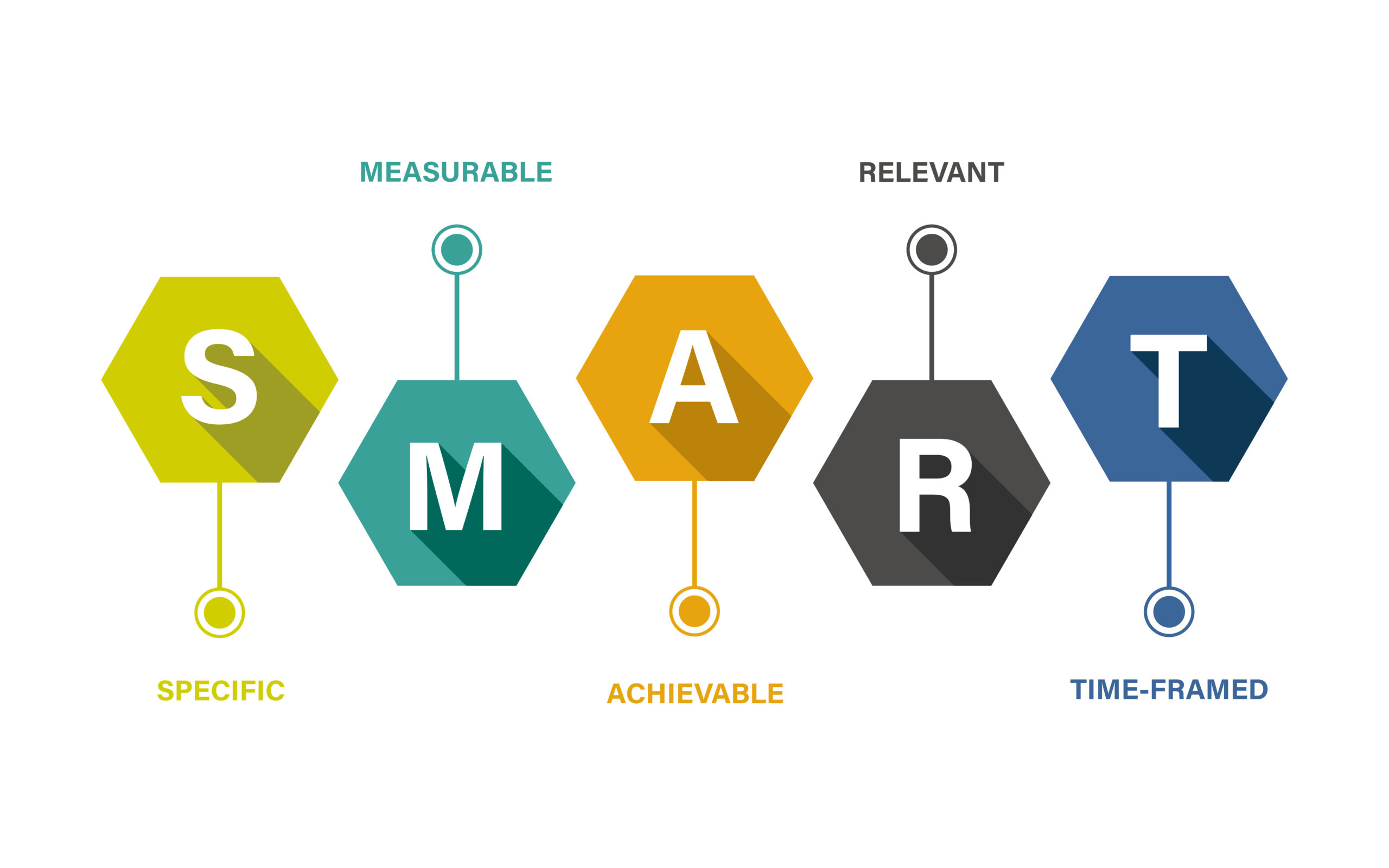
SMART stands for "Specific, Measurable, Attainable, Relevant and Time-bound". These five criteria are essential for turning ideas into realistic and practical goals, which is why the methodology is widely used to help people and companies define and achieve objectives clearly and efficiently.
By using the approach of the strategic management tool, SMART, it is possible to avoid unclear goals and define specific objectives to achieve the result expected by the company. In addition, the methodology provides expectations, indicators and actions that increase the chances of achieving the proposed objective.
How to use the SMART methodology?
To apply the SMART model, you need to follow each aspect of the acronym to make it easier to set goals:
- Specific: Goals should be precise and well-defined, avoiding generalities. This ensures that everyone clearly understands what needs to be achieved.
- Measurable: Goals must be quantifiable, so that it is possible to measure progress and determine when they have been achieved. In addition, clear and measurable indicators are essential for monitoring progress towards the goal.
- Attainable: Goals must be realistic. It is important to consider the resources, time and skills available to determine whether the goal can be achieved.
- Relevant: Goals must be aligned with the overall objectives of the person or company, and be meaningful and relevant to drive progress and success.
- Temporal: Goals should have defined deadlines, establishing a specific period for their achievement. This helps maintain focus and establish milestones along the way.
To make it easier for you to understand, let's illustrate what a Non-SMART Goal and a SMART Goal would be:
Non-SMART goal: "I want to earn more money".
SMART Goal: "By December this year, I want to increase my current salary by 10% (R$ 2,000) by getting a new position in another company or being promoted in my current company."
In the example above, the SMART goal is more specific and achievable than the non-SMART goal. It is specific because it sets a concrete goal, indicating the percentage of salary increase desired and a defined deadline for achieving this goal. It is therefore preferable to use it.
BSC
The Balanced Scorecard (BSC) is a strategic management tool widely used to facilitate planning and measure business performance in a balanced way. Developed by Harvard University professors Robert Kaplan and David Norton in the 1990s, the BSC emerged as a response to the limitations of existing methods that focused mainly on financial indicators.
The BSC's prominence is due to its innovative approach, which makes it possible to evaluate and improve business performance in a comprehensive way. In addition to helping organizations align their mission, vision and values, the BSC goes beyond financial analysis, adopting a complete view of the business from a 360° perspective.
Unlike just measuring profit or loss in the short term, the BSC evaluates the company's progress in relation to long-term goals, converting them into objectives, indicators and strategic initiatives. In addition, this management model makes it possible to tolerate some losses in the present while aiming for success in the future.
How to use the BSC?
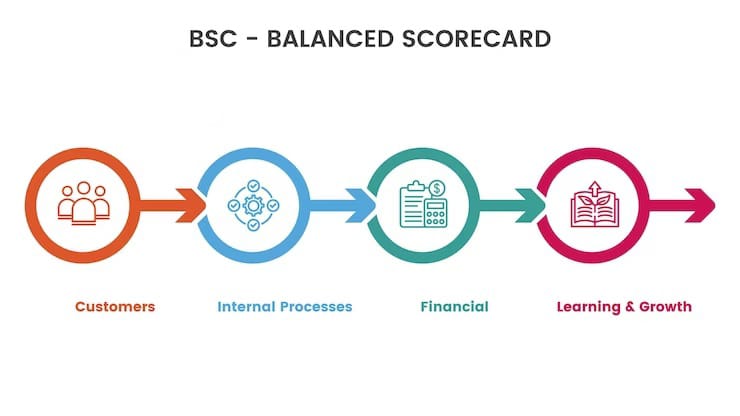
The Balanced Scorecard (BSC) is based on four perspectives. They are:
Financial perspective: From this perspective, the company's short-, medium- and long-term financial objectives are considered, taking into account the expectations of investors. Metrics are used such as Return on Investment (ROI), Lifetime Value (LTV), Customer Acquisition Cost (CAC), Average Ticket and Churn Rate, among others, which must be aligned with the type of business and the market in which it operates.
Customer perspective: This perspective focuses on customer relations and market share. Strategies are defined to ensure customer retention and acquisition, as well as customer profitability and the Ideal Customer Profile (ICP).
Internal Processes Perspective: The aim of this perspective is to identify the processes that have the greatest impact on the business and improve them. As well as focusing on the quality of internal processes, it is also important to identify the need to create new processes that make the strategy more plausible.
4- Learning and growth perspective Invertir en cualificación y formación, aplicar un Código de Cultura adecuado, promover la satisfacción de los empleados y monitorizar el clima organizacional son algunos de los puntos clave para el crecimiento sostenible de la empresa.
It is important to note that these perspectives of the Balanced Scorecard are interdependent, meaning that in order to achieve the financial objectives, it is necessary to meet customer needs, improve internal processes and invest in staff learning and growth. The BSC provides a balanced approach to measuring and driving the organization's performance in all these perspectives.
PDCA
The PDCA Cycle is a strategic management tool that consists of four main stages: Plan, Do, Check and Act. Its aim is to promote continuous improvements in processes and products, in order to solve problems and overcome obstacles.
Initially developed for the quality area, PDCA is applicable in different sectors of the organization. When a company identifies a problem or need, it follows the PDCA steps to find effective solutions.
But it's also important to make it clear that the PDCA is a continuous cycle, allowing the planning to be reviewed at the end and the cycle to be restarted, always with a view to constant improvement. Therefore, processes can and should be constantly improved over time.
How to apply the PDCA cycle?
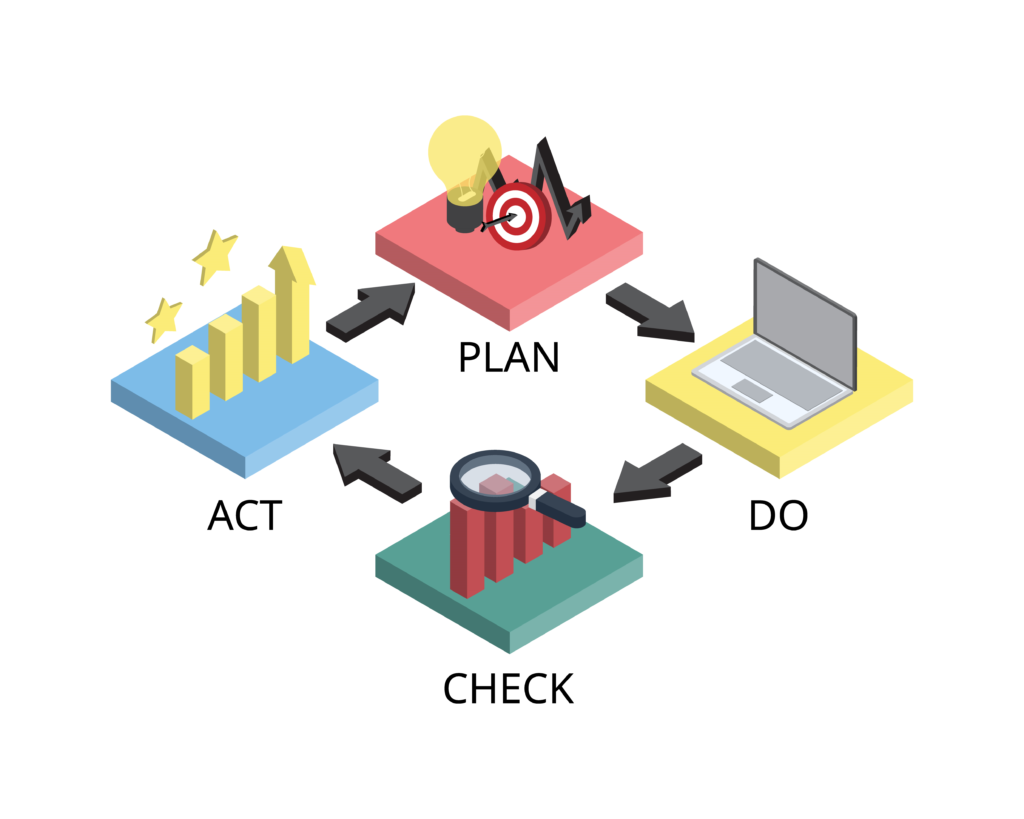
To apply the PDCA Cycle in companies, it is essential that the team understands the methodology and its stages. Employees must know how the PDCA works and be aware of the importance of following the steps to improve processes. That's why, first of all, you need to check how each topic works:
- Plan: Identify problems or needs, set goals and objectives, and define success indicators.
- Do: Putting the action plan into practice.
- Check: Analyze the results and learn from them, using the defined indicators, and correct identified faults.
- Act: Turning lessons learned into actions for improvement, standardizing efficient processes and correcting flaws.
When applying the PDCA Cycle, it is essential to establish the people responsible and the deadlines clearly and precisely. The team must also understand what the objectives of applying the PDCA are and what results are expected to be achieved through it.
Just as the PDCA proposes, the company must also plan, execute, check and act on the application of the methodology itself. It is essential to constantly monitor the effectiveness and improvement of the company's processes, as this action helps to improve the application of the Cycle.
By always paying attention to the PDCA, the company will be able to boost its performance and promote continuous improvements in its processes, achieving increasingly efficient results.
Scrum
Developed by Ken Schwaber and Jeff Sutherland, Scrum is an agile strategic management tool for dealing with complex projects. It is widely used in the area of software and systems development by teams of various sizes and scenarios. Scrum is based on cycles of activities called Sprints, planned in advance, with a focus on quality and meeting deadlines.
In addition, Scrum achieves efficient results with fewer resources and time, as it allows for teamwork, monitoring of product progress and continuous learning. The tool also makes it possible to correct problems during the process, obtaining feedback from users throughout the Sprints.
How to apply Scrum?

To implement the Scrum methodology, the following steps must be followed:
- Choose a pilot project: Start with a simple, low-risk development project that allows the team to become familiar with the Scrum process without worrying too much about the specific tasks. This will increase the chance of success and ease the team's learning curve.
- Define the Product Owner: The Product Owner acts as a bridge between the development team and the business areas interested in the project.
- Create a Product Backlog: The Product Backlog is a list that describes all the activities needed to turn the product idea into reality. In addition, the Product Owner is responsible for building, revising and supplementing this list, taking into account the expectations of the stakeholders and the development team.
- Scale your team: The Scrum team is responsible for building the product and carrying out the tasks in the Product Backlog. It is essential that the team members have the necessary skills and are capable of carrying out the project's activities. It is recommended that the team has between 3 and 9 people and that everyone is capable of managing themselves on a day-to-day basis.
- Plan the Sprints: Sprints are development cycles lasting less than a month, usually two weeks. At the start of each Sprint, the Product Owner, the team and the Scrum Master meet to select the tasks from the Product Backlog that will be carried out during that cycle. At the end of each Sprint, a well-defined objective must be achieved and completed.
By following these steps, you'll be on your way to successfully implementing the Scrum strategic management tool in your projects.
Improve your strategic management tools with a multi-methodological platform
Si tienes dificultades para centralizar todos los resultados de tu empresa en un solo lugar debido al uso de hojas de cálculo y a la utilización de diferentes metodologías de gestión en cada área, es hora de considerar la contratación de un software de gestión especializado, como Actio Strategy Management.
Actio’s Actio Strategy Management It's a complete software, from ActioThis is a tool that centralizes all the company's needs, both in terms of development and in terms of monitoring performance and results. It offers different methodologies, such as BSC, OKR, PDCA, ESG and others, so you can choose the one that best suits your organization's needs.
With this platform, it is possible to boost the performance of all teams, seeking excellence, success and quality in processes. After all, the platform makes it possible to boost results based on data and methods that make management more strategic.
Also, now with the integration of ChatGPT into our solutions, the Actio Strategy Management Count on a virtual consultant through artificial intelligence to guide you in identifying causes, ensuring results and methodological coherence in your processes. Don't forget to follow ActioLinkedin and Facebook.