

In the business world, strategic decision-making is crucial to the success of any organization. Among the tools that help in this process, the 4×4 risk matrix has emerged as a key element, but many are wondering: What actually is the 4×4 risk matrix?
In this blog, we will explore in detail what this methodology is and how it can be a powerful ally in identifying and managing risks. Have a good read!
What is a Risk Matrix?
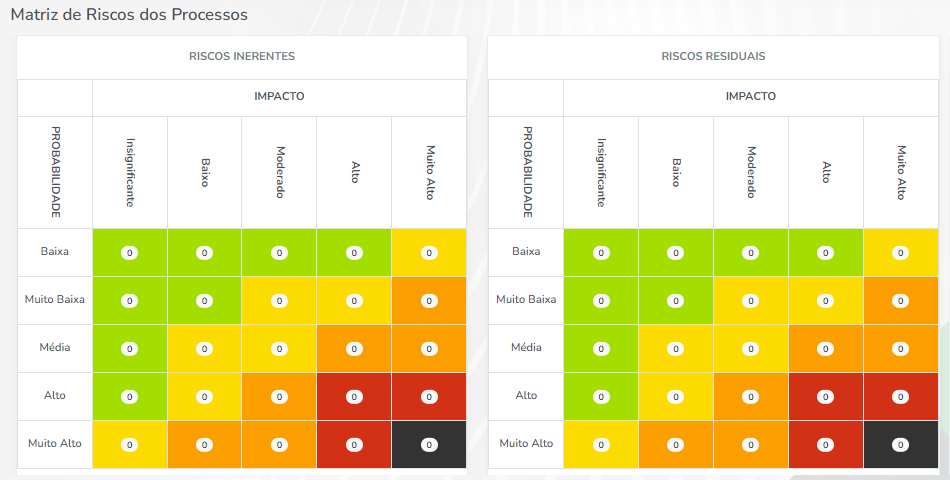
The Risk Matrix, also known as the Probability and Impact Matrix, is a risk management tool that offers a visual approach to identifying the risks that require the most attention.
Furthermore, this tool is applied during the risk assessment phase, so it is essential to identify the risks before using it.
The significant differential of the Risk Matrix lies in its ability to provide a clear visualization of the information related to a specific set of risks.
In addition, because it is an easy-to-understand tool and presents information clearly and precisely, it contributes to team engagement in the risk management process.
But what is the 4×4 Risk Matrix anyway?
The risk matrix can be categorized in different ways, such as 3×3, 4×4 and 5×5.
However, the main difference with the 4×4 risk matrix lies in its visual nature, using a Cartesian plane to identify the risks present in an area. organization.
It is called this because it is made up of four quadrants, each representing a unique combination of probability and impact of the risks identified.
In addition, this tool offers a visual approach that makes it easier to understand the interaction between these critical factors.
Looking for risk management software? Meet Belt!
When to use the 4×4 Risk Matrix?

The 4×4 Risk Matrix is used when you want to assess and prioritize the risks identified in a project based on their probability of occurrence and impact on the project. Here are some situations in which you can use the 4×4 risk matrix:
1- Project planning
At the start of a project, the 4×4 risk matrix can be used to identify and assess potential risks.
In addition, this helps the project team to better understand the challenges that may arise and to develop strategies to mitigate or deal with these risks.
2- Prioritization of risks
The matrix helps prioritize risks based on their probability of occurrence and impact. Therefore, adopting the methodology allows the project team to focus its efforts on managing the most critical and significant risks to the project's success.
3- Risk communication
Since the 4×4 Risk Matrix provides a quick and clear overview of the main challenges that could affect the project, the tool can be used when risks need to be communicated to all stakeholders.
4- Decision-making
During the project lifecycle, the matrix can be revisited to reflect changes in conditions and understanding of the risks. In addition, this helps in making informed decisions about mitigation strategies or adjustments to the project plan.
How to apply the 4×4 Risk Matrix?
Now that you know that the 4×4 risk matrix is a visual tool that helps to identify, assess and manage the risks of a project. Below is a step-by-step guide to how the methodology works.
1- Risk Identification
First of all, it is essential to identify the risks that could impact the project. These risks can arise both internally and externally, presenting themselves as positive opportunities or negative threats.
2- Probability
At this stage, probability comes into play to quantify the chance of a risk materializing. Generally, this probability is classified on a scale of low, medium and high.
In addition, each risk is carefully assessed as to its likelihood of occurrence.
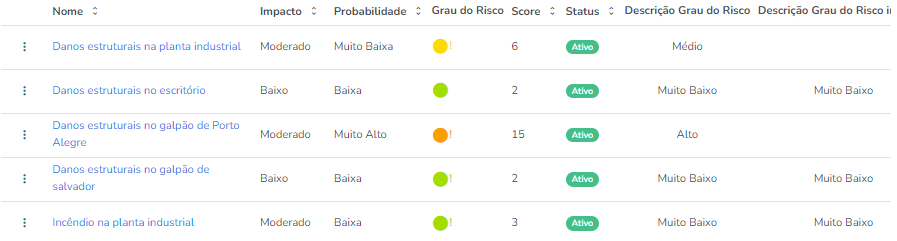
3- Impact
Along with probability, impact represents the magnitude of the effects should a risk materialize. In other words, similar to probability, impact is assessed on a scale ranging from low, medium to high.
4- Construction of the matrix
The 4×4 risk matrix is made up of four quadrants, in which probability is represented on the horizontal axis and impact on the vertical axis. In other words, at this stage, these quadrants are labeled as follows:
- Quadrant 1: High Impact and High Probability (Critical Risks)
- Quadrant 2: High Impact and Low Probability
- Quadrant 3: Low Impact and High Probability
- Quadrant 4: Low Impact and Low Probability
5- Prioritizing and Responding to Risks
With the matrix filled in, it's time to prioritize the risks based on their position in the quadrants. Risks located in Quadrant 1, for example, are considered critical and require immediate attention.
However, the risks in the other quadrants are also assessed and addressed in order of priority.
6- Continuous Monitoring
Finally, it is worth noting that the 4×4 risk matrix is not a static tool. It should be revisited and updated regularly as the project progresses and new information about the risks becomes available. This practice ensures that the project team is always aware of changing risk conditions; allowing adjustments to be made to response strategies as necessary.
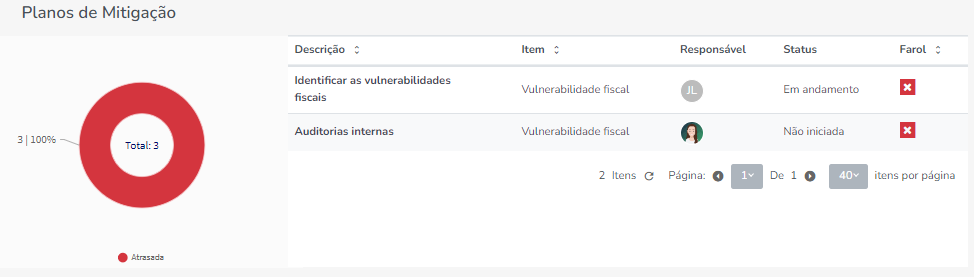
Get to know Belt by Actio, risk management software
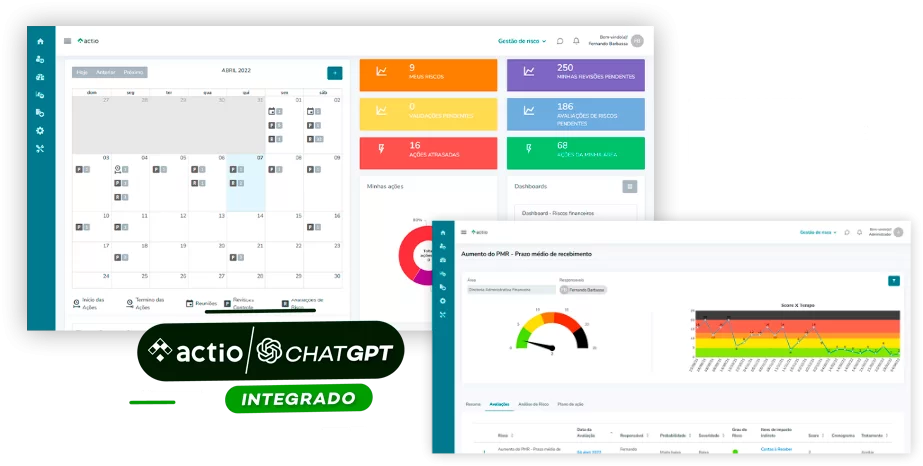
Due to the utmost importance of corporate risk management, we at Actio, a company within the Falconi, group, have developed Belt by Actio—a software designed to meet your organization’s needs.
With centralized communication, this software can be a valuable tool for tracking actions, creating risk matrices, mitigation plans, and more.
Success stories; like the Oswaldo Cruz hospital already use risk management software to improve business performance; since Belt by Actio allows for creating better plans to reduce these risks and implement effective controls. Take advantage of the opportunity to enhance your business’s competitive advantage.
Frequently Asked Questions

1- What are the benefits of using the 4×4 risk matrix?
The use of the 4×4 risk matrix brings several benefits, such as a comprehensive view of the risks, helping to make informed decisions.
In addition, the tool facilitates communication between stakeholders; it allows for the efficient allocation of resources and contributes to the implementation of preventive strategies.
2- How do you identify and classify risks in the quadrants of the 4×4 matrix?
Identifying and classifying risks in the quadrants of the matrix involves analyzing the probability and impact of each risk. Probability represents the chance of occurrence, while impact measures the consequences. Risks are then positioned in the quadrants based on these criteria, helping with prioritization.
3- What are the common challenges in implementing the 4×4 risk matrix?
Resistance to change, lack of precise data for risk assessment and difficulty in assigning specific values to probability and impact.
In addition, effectively integrating the matrix into existing processes can also be a challenge; requiring careful planning and stakeholder awareness.
4- Is there a standard template for creating a 4×4 risk matrix?
Although there is no single model, it is possible to follow a basic structure. In other words, you need to identify the axes of probability and impact, define scales for each one and assign risks to the corresponding quadrants.
Customization is essential to adapt the matrix to the particularities of each context, project or organization.
5- How does the 4×4 risk matrix help with strategic decision-making?
La matriz de riesgos 4×4 es una herramienta crucial para la toma de decisiones estratégicas porque proporciona una representación visual clara de los riesgos. Al situar los riesgos en cuadrantes en función de su probabilidad e impacto; las organizaciones pueden centrarse en las áreas de alto riesgo; aplicar estrategias preventivas y asignar recursos de forma eficiente; contribuyendo así a tomar decisiones más informadas y resistentes a los riesgos.
Conclusion
In short, the 4×4 risk matrix is an indispensable tool for companies seeking a proactive approach to risk management.
In other words, by understanding how it works, its efficient implementation not only reduces risks; it also opens doors to opportunities that might otherwise go unnoticed.
Don’t forget to follow Actio on Instagram, Linkedin and Facebook.
Did you like the content? Tell me in the comments.